


 +919011100010
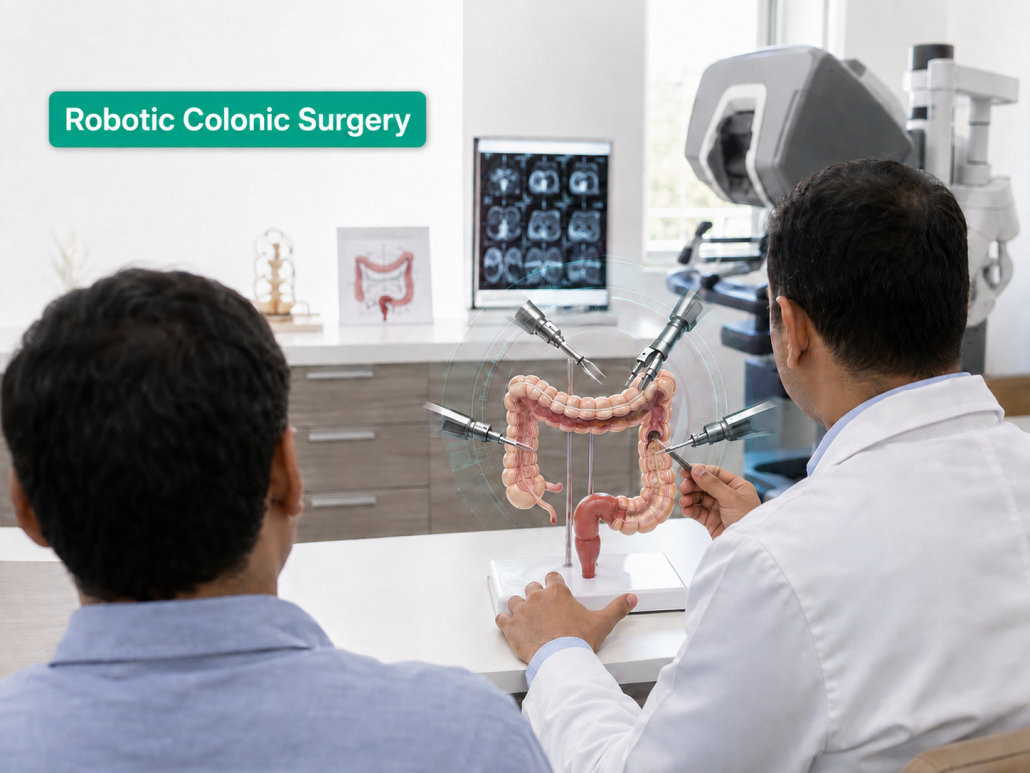
Robotic Colonic Surgery in Pune | Doss India
Robotic colonic surgery is a minimally invasive option for selected conditions that require removal of part or, less commonly, all of the colon. During the operation, the surgeon controls a magnified camera and articulated instruments from a console. The robotic system does not operate independently or decide how much bowel should be removed.
People looking for robotic colonic surgery in Pune should first receive a clear diagnosis and an individual surgical plan. Colon cancer, complex polyps, diverticular disease, inflammatory bowel disease and other colon problems require different investigations and different operations. Conventional laparoscopy or open surgery may be more appropriate in some situations, particularly when the condition is urgent or technically unsuitable for a robotic approach.
At DOSS India, the purpose of consultation is to confirm why surgery is being considered, explain the available approaches and help the patient make an informed decision. Procedure availability, the treating hospital and any need for gastroenterology, oncology, radiology, pathology or stoma-care support should be confirmed for the individual case.
Important: “Robotic” describes the instruments used by the surgeon. It does not mean an autonomous robot performs the operation. The surgeon remains in control throughout the procedure.
What Is Colonic Surgery?
The colon is the main part of the large intestine. It begins at the caecum on the right side of the abdomen and continues through the ascending, transverse, descending and sigmoid colon. It absorbs water, stores waste and moves stool towards the rectum.
Colonic surgery refers to operations on this part of the digestive tract. A colectomy removes a diseased section of colon. The remaining healthy ends may be joined together in an anastomosis. In some cases, the bowel is brought to the abdominal wall to create a stoma so that waste passes into a collection bag. A stoma may be temporary or permanent, depending on the disease, bowel condition and safety of reconnection.
Colon surgery should not be confused with every form of colorectal surgery. The rectum sits lower in the pelvis and rectal operations may require different staging, imaging, cancer treatment and surgical planning. This page focuses on surgery involving the colon; the exact location must be confirmed before a procedure is named.
Which Conditions May Require Colon Surgery?
Many colon problems are initially treated with medicines, endoscopy, dietary measures or observation. Surgery is considered when it offers a meaningful benefit, when less invasive treatment is not suitable, or when complications make an operation necessary.
Colon cancer or a suspicious colon tumour
Surgery is a central treatment for many localised colon cancers. The operation removes the involved segment of colon with its blood supply and regional lymph nodes. The exact resection depends on the tumour location and stage. Pathology after surgery helps determine whether additional treatment should be discussed with an oncologist.
Polyps that cannot be removed safely by colonoscopy
Most polyps are treated endoscopically. Colon resection may be considered when a polyp is very large, has features suggesting cancer, cannot be removed completely, or is in a position where endoscopic removal would carry unacceptable risk. A specialist endoscopic opinion may be appropriate before surgery in selected cases.
Diverticular disease
Diverticulitis does not automatically require an operation after a fixed number of attacks. Elective resection may be discussed when episodes are recurrent or persistent, when symptoms significantly affect daily life, or when complications such as a stricture, fistula, abscess, obstruction or perforation have occurred. The decision should reflect the person’s history and health rather than a one-size-fits-all rule.
Inflammatory bowel disease
Crohn’s disease or ulcerative colitis can require surgery when medicines no longer control the disease, when dysplasia or cancer develops, or when there is severe bleeding, obstruction, perforation, fistula or toxic colitis. These operations should be planned with the gastroenterology team because the extent of resection and the possibility of a staged procedure or stoma differ from routine segmental colectomy.
Obstruction, twisting, reduced blood supply or perforation
A blocked, twisted, ischaemic or perforated colon can become life-threatening. These problems often require urgent hospital treatment and may not be suitable for a planned robotic operation. Resuscitation, imaging and an emergency surgical assessment take priority over the choice of technology.
Other less common reasons for surgery include a benign stricture, complex fistula, uncontrolled bleeding, hereditary polyposis syndrome or another structural colon disorder. A diagnosis should be established before describing an operation as necessary.
Symptoms That Need Medical Assessment
Colon conditions can produce overlapping symptoms, and symptoms alone cannot show whether robotic surgery is needed. Assessment is advisable for persistent rectal bleeding, unexplained anaemia, a lasting change in bowel habits, abdominal pain or swelling, recurrent vomiting, unexplained weight loss, a colon lesion found on imaging or colonoscopy, or ongoing symptoms after treatment for diverticulitis or inflammatory bowel disease.
Seek urgent medical care for severe or rapidly worsening abdominal pain, a swollen or rigid abdomen, repeated vomiting, inability to pass stool or gas, fever with marked weakness, fainting, heavy rectal bleeding, confusion or signs of dehydration. These may indicate obstruction, perforation, severe infection or bleeding and should not wait for an outpatient robotic-surgery consultation.
How Is the Need for Colon Surgery Confirmed?
The evaluation begins with the symptoms, bowel history, previous abdominal operations, family history, medicines and general health. The abdomen is examined, and reports or images from earlier tests are reviewed rather than relying only on a written summary.
Colonoscopy allows the lining of the colon to be inspected and enables biopsy or removal of many polyps. CT scanning can define the location and extent of disease, look for complications and support operative planning. Blood tests may assess anaemia, infection, kidney and liver function, nutrition and fitness for anaesthesia.
When colon cancer is suspected or confirmed, staging commonly involves pathology from a biopsy and cross-sectional imaging. A baseline tumour marker may be requested when clinically relevant. The case may need discussion in a multidisciplinary cancer meeting so that surgery, oncology treatment and the sequence of care are coordinated. Not every patient needs every test, and investigation should be tailored to the diagnosis.
Types of Robotic Colon Resection
The name of the operation comes from the part of colon removed, not from the robotic platform. Common procedures include:
- Right hemicolectomy: removal of the right side of the colon for a lesion in the caecum, ascending colon or nearby transverse colon, with reconstruction based on the operative plan.
- Left hemicolectomy: removal of a left-sided colon segment when disease involves the descending colon or an adjacent area.
- Sigmoid colectomy: removal of the sigmoid colon, commonly considered for selected sigmoid tumours, diverticular complications or strictures.
- Segmental or partial colectomy: removal of a defined diseased segment while preserving the remaining colon when oncologically and technically appropriate.
- Subtotal or total colectomy: removal of most or all of the colon for selected extensive disease, multiple lesions, hereditary conditions or inflammatory bowel disease.
The planned resection may change if operative findings differ from scans, if the disease involves adjacent structures, or if safe reconnection is not possible. Consent should therefore cover the expected operation, reasonable alternatives and changes that may become necessary for safety.
What Happens During Robotic Colon Surgery?
The operation is generally performed under general anaesthesia. Small ports are placed in the abdomen, and carbon dioxide creates working space. The robotic system is positioned beside the patient, after which the surgeon controls the camera and instruments from a console while the bedside team assists.
The diseased colon segment is mobilised from surrounding tissues. Relevant blood vessels are divided according to the condition being treated. For cancer surgery, the resection must follow oncological principles for margins and regional lymph-node removal. The diseased segment is then removed through a protected extraction incision, which is larger than a port but usually smaller than a conventional open incision.
The remaining bowel may be joined with an anastomosis inside or outside the abdomen, depending on the operation and surgeon’s plan. Perfusion, tension and the overall condition of the patient influence whether reconnection is considered safe. A temporary or permanent stoma may be necessary in selected cases.
If dense adhesions, uncontrolled bleeding, unexpected disease, poor visibility or another safety concern prevents completion robotically, the surgeon may convert to conventional laparoscopy or open surgery. Conversion is a safety decision, not automatically a complication or failure.
What Does the Robotic Platform Add?
Robotic systems provide a magnified three-dimensional view, instruments that articulate at the tip, motion scaling and stable camera control. These features may assist dissection, suturing and construction of an intracorporeal anastomosis in selected patients. They can be useful when the surgeon needs precise movement within a confined or complex operative field.
The platform does not replace surgical judgement, pathology, cancer principles or the skill of the operating team. Robotic surgery also requires specialised equipment, trained theatre staff, setup time and additional resources. Technical features should be discussed as part of the complete treatment plan rather than presented as a guarantee of less pain, fewer complications or faster recovery.
Who May Be Considered for Robotic Colonic Surgery in Pune?
A robotic approach may be considered for an adult with a confirmed colon condition when elective minimally invasive resection is appropriate, the required expertise and hospital facilities are available, and the expected benefits justify the resources involved. Selected right, left, sigmoid and segmental colectomies may be planned robotically.
Suitability depends on the location and extent of disease, whether the operation is for cancer or a benign condition, previous abdominal surgery, body habitus, heart and lung health, nutritional status, medicines, anaesthesia risk and the possibility of an anastomosis or stoma. For cancer, staging and multidisciplinary planning also influence the sequence and type of treatment.
Open surgery may be more appropriate for haemodynamic instability, perforation with widespread contamination, severe obstruction, very bulky or locally invasive disease, extensive adhesions or another situation in which rapid access is safer. Conventional laparoscopy remains an effective minimally invasive approach for many colon operations and may provide the same clinical objective without robotic resources.
The decision should therefore be made after examining the patient and reviewing the actual imaging, endoscopy and pathology—not from the keyword searched online or the availability of a surgical robot.
Robotic vs Laparoscopic vs Open Colectomy
Open colectomy uses a larger abdominal incision and provides direct access to the colon. It remains essential in emergencies, extensive disease and cases where minimally invasive access is unsafe or impractical.
Laparoscopic colectomy uses a camera and long instruments through small ports. It is an established minimally invasive alternative to open resection for suitable colon-cancer and benign-disease cases when performed by an appropriately trained team.
Robotic colectomy is also minimally invasive, but the surgeon controls articulated instruments at a console. Current comparative studies suggest that robotic colorectal surgery may reduce conversion to open surgery in some settings and may facilitate intracorporeal reconstruction. However, operative time and cost can be higher, colon-specific evidence is not uniform, and overall complication and cancer outcomes are often comparable with laparoscopy.
No approach is automatically “best.” Diagnosis, safety, surgeon experience, hospital systems, likely recovery, cost and informed patient preference matter more than the name of the platform. DOSS India also provides assessment for laparoscopic GI surgery in Pune, allowing the operative approach to be selected according to clinical need.
Robotic Colon Surgery for Cancer
For colon cancer, the quality of cancer surgery is defined by removing the appropriate colon segment with clear margins and an adequate lymph-node specimen while avoiding tumour disruption. The operation should fit the tumour location, stage, biology and any evidence of spread. The robotic platform is a method of access; it does not change the cancer diagnosis or remove the need for correct oncological technique.
After surgery, a pathologist examines the tumour, margins, lymph nodes and other relevant features. The final report may change the stage and help the oncology team decide whether chemotherapy or surveillance is appropriate. Long-term follow-up can include clinical review, blood tests, imaging and colonoscopy according to the diagnosis and treating team’s plan.
Patients with suspected metastatic disease, locally advanced cancer or another complex presentation may need a broader multidisciplinary strategy before an operation is scheduled. Treatment should not be delayed simply to obtain a robotic date if another safe and appropriate approach is available sooner.
Will I Need a Stoma?
Many elective segmental colon resections are completed with an anastomosis and no stoma. A stoma may still be recommended if the bowel cannot be joined safely, if the connection needs protection, if there is obstruction or contamination, or if the disease requires removal of a larger section.
The possibility should be discussed before surgery even when a stoma is not expected. If there is a meaningful chance of one, preoperative counselling and marking by a trained stoma-care professional can improve preparation. The surgeon should explain whether a proposed stoma is intended to be temporary or permanent and what would determine later reversal.
Preparing for Robotic Colon Surgery
Preparation begins with confirming the diagnosis and improving factors that can affect infection, healing and recovery. The team may address anaemia, malnutrition, uncontrolled diabetes, smoking, alcohol use, dehydration or another medical condition before elective surgery. A dietitian, physician, anaesthetist or oncologist may contribute when required.
Tell the team about blood thinners, diabetes medicines, weight-loss medicines, steroids, supplements, allergies, heart or lung disease, sleep apnoea and previous anaesthesia problems. Do not stop prescribed treatment without instructions from the surgeon or anaesthetist.
Bowel preparation, oral antibiotics and dietary instructions vary according to the planned operation and hospital protocol. Follow only the instructions provided for your case. You will also receive fasting guidance and information about admission, pain control, breathing exercises, walking and prevention of blood clots.
Bring colonoscopy and pathology reports, scan images, previous operative notes and a complete medicine list. Before giving consent, ask which segment is expected to be removed, whether cancer principles apply, how the bowel may be reconnected, when a stoma might be required, what could lead to open conversion and which costs are included.
Recovery After Robotic Colectomy
Recovery varies with the extent of resection, diagnosis, age, general health, previous treatment, complications and whether an anastomosis or stoma is created. Many elective minimally invasive colectomies involve a hospital stay of several days, but discharge should be based on clinical readiness rather than a promised number of nights.
Enhanced-recovery pathways encourage appropriate pain control, early walking, breathing exercises, timely nutrition and removal of tubes when safe. The bowel can be slow to restart, so bloating, altered bowel frequency and temporary changes in appetite may occur. The team will advise how food and fluids should be advanced.
At home, activity is increased gradually. Desk-based work may be possible sooner than physically demanding work, but return dates should be personalised. Driving, lifting, wound care and exercise instructions depend on pain control, medication and the operation performed. Bowel habits can take time to settle, especially after a larger resection.
Contact the surgical team for persistent vomiting, increasing abdominal pain or swelling, fever, wound redness or discharge, heavy rectal bleeding, inability to eat or drink, reduced urine, breathing difficulty, calf swelling, or a new problem with a stoma. Severe or rapidly worsening symptoms require urgent assessment.
Possible Risks and Limitations
All colon operations have risks, including minimally invasive procedures. The individual consent discussion should reflect the diagnosis, planned resection, medical condition and whether the operation is elective or urgent. Possible risks include:
- Bleeding, wound infection, intra-abdominal infection or complications related to general anaesthesia
- Leakage from the bowel connection, which may require drainage, antibiotics, a stoma or another operation
- Temporary delay in bowel function, prolonged ileus, bowel obstruction or adhesions
- Injury to the small bowel, bladder, ureter, spleen, blood vessels, nerves or another nearby structure
- Blood clots in the legs or lungs, chest infection, urinary infection or kidney problems
- Need for a temporary or permanent stoma
- Conversion to laparoscopic or open surgery when required for safety
- Narrowing of the anastomosis, incisional hernia, altered bowel habits or need for further treatment
- Cancer recurrence or need for chemotherapy when the operation is for malignancy
- Serious complications, return to theatre or death, although individual risk varies substantially
Robotic technology cannot eliminate these risks. A personalised risk estimate should consider age, frailty, obesity, smoking, steroid use, nutrition, emergency presentation and other medical conditions.
Why Choose DOSS India for Colon Surgery Assessment?
DOSS India is a Pune-based surgical centre focused on hernia, bariatric and minimally invasive gastrointestinal surgery. The team evaluates the diagnosis, imaging, endoscopy, pathology, previous operations and general health before recommending an operative approach.
Dr. Neeraj V. Rayate is an MBBS, MS and DNB-qualified laparoscopic and robotic surgeon. The DOSS India website lists training and certification in robotic surgery and experience in gastrointestinal and abdominal surgery. Dr. Satish Pattanshetti is an MBBS and MS-qualified laparoscopic bariatric and metabolic surgeon who contributes complementary experience within the DOSS surgical pathway.
For a complex colon condition, safe care may require collaboration beyond the operating surgeon. Gastroenterology, radiology, pathology, anaesthesia, oncology, nutrition and stoma-care input should be arranged according to the diagnosis and treating hospital. Read more about DOSS India and its surgical team.
The availability of open, laparoscopic and robotic approaches allows the recommendation to begin with the patient’s condition rather than a single technology. Before publication, DOSS India should confirm the surgeons’ current credentials, the hospitals at which robotic colectomy is performed and the exact scope of cancer and benign-colon services offered.
Cost of Robotic Colonic Surgery in Pune
The cost of robotic colonic surgery in Pune cannot be estimated responsibly from the diagnosis name alone. It varies with the colon segment involved, cancer or benign disease, complexity, previous surgery, investigations, robotic consumables, stapling devices, pathology, anaesthesia, room category, intensive-care needs, length of stay and whether a stoma is required.
Cancer care may also involve oncology consultations, chemotherapy or surveillance that is separate from the surgical estimate. Insurance coverage depends on the policy, waiting periods, medical necessity, hospital network, room entitlement and pre-authorisation terms.
After reviewing the reports and defining the operation, the team can provide a case-specific estimate and explain what is included. A higher package price does not guarantee a better outcome, and the surgical approach should not be selected from an advertised price alone.
What to Expect at Your DOSS India Consultation
- The surgeon reviews the symptoms, diagnosis, colonoscopy, pathology, scans, previous treatment, medicines and medical conditions.
- The reason for surgery and any reasonable non-surgical or endoscopic alternative are explained.
- The team clarifies which colon segment may need removal and whether cancer staging or multidisciplinary review is required.
- Open, laparoscopic and robotic options are compared according to safety, feasibility, likely recovery and cost.
- If surgery is planned, the discussion covers anastomosis, possible stoma, conversion to open surgery, material risks, preparation, hospital stay and follow-up.
Book a Consultation for Robotic Colonic Surgery in Pune
If you have a confirmed colon tumour, a complex polyp, recurrent diverticular complications, inflammatory bowel disease requiring surgical review or another condition for which colectomy has been suggested, a structured consultation can clarify the diagnosis and options.
Consult the DOSS India team to understand whether a robotic approach is appropriate for your case or whether conventional laparoscopy, open surgery, endoscopic treatment or further investigation would be more suitable.
DOSS Clinic: OPD No. 5, Jupiter Hospital Lane, 3 Baner-Balewadi Road, Prathamesh Park, Baner, Pune, Maharashtra 411045
Phone: +91 90111 00010 / 020 27992799
Appointments: Contact DOSS India
Medical disclaimer: This page provides general educational information and does not replace consultation, examination, diagnosis or treatment by a qualified medical professional. Robotic surgery is not appropriate for every colon condition. Recommendations, risks, cost and recovery vary. Seek urgent medical care for severe or rapidly worsening symptoms.