


 +919011100010
Robotic Hiatus Hernia Surgery in Pune
DOSS India provides evaluation and surgical planning for people considering robotic hiatus hernia surgery in Pune. A hiatus hernia develops when part of the stomach moves through the natural opening in the diaphragm and into the chest. Some people have no symptoms, while others experience persistent reflux, regurgitation, swallowing difficulty, chest or upper abdominal discomfort, or problems related to a large paraesophageal hernia.
Dr. Neeraj Rayate and Dr. Satish Pattanshetti assess the type and size of the hernia, symptom pattern, test results, previous treatment, general health and patient priorities before advising whether observation, medical care, laparoscopic repair, robotic-assisted repair, or another approach is appropriate. Robotic surgery is an advanced minimally invasive option, but it is not automatically the right choice for every patient.
What Is a Hiatus Hernia?
A hiatus hernia, also called a hiatal hernia, occurs when the upper part of the stomach passes through the oesophageal opening in the diaphragm. The diaphragm is the muscle that separates the chest from the abdomen. When this opening becomes widened or the supporting tissues weaken, the stomach can move upward and affect the normal barrier that helps prevent acid reflux.
A hiatus hernia is different from an inguinal, umbilical or incisional hernia. It usually does not produce an external bulge. Instead, it may be discovered during an endoscopy, barium swallow, CT scan or another investigation performed for reflux, chest discomfort, anaemia or swallowing problems.
Types of Hiatus Hernia
The type of hiatus hernia matters because symptoms, urgency and treatment decisions are not the same for every patient.
Type I – Sliding hiatus hernia: This is the most common form. The junction between the oesophagus and stomach moves above the diaphragm, often intermittently. It is frequently associated with gastro-oesophageal reflux disease, although not every sliding hernia causes symptoms.
Type II – Paraesophageal hernia: Part of the stomach moves beside the oesophagus while the gastro-oesophageal junction remains near its usual position. These hernias may become large and can cause pressure, pain, early fullness or mechanical complications.
Type III – Mixed hiatus hernia: Both the gastro-oesophageal junction and a larger part of the stomach move into the chest.
Type IV – Complex paraesophageal hernia: The stomach and another abdominal organ may pass through the hiatus. This is uncommon and usually requires detailed specialist assessment.
Symptoms That May Need Evaluation
Small hiatus hernias may cause no symptoms. When symptoms occur, they may overlap with GERD and other oesophageal, stomach, heart or lung conditions. A proper diagnosis is important instead of assuming that every episode of acidity or chest pain is caused by a hernia.
- Frequent heartburn or acid reflux, particularly after meals or when lying down
- Regurgitation of food or sour fluid into the throat
- Difficulty or discomfort while swallowing
- Chest pain, upper abdominal pain or pressure after eating
- Early fullness, bloating, repeated belching or reduced meal tolerance
- Chronic cough, throat irritation or reflux-related breathing symptoms
- Iron-deficiency anaemia or evidence of bleeding in selected large hernias
- Persistent symptoms despite appropriately prescribed medicines and lifestyle measures
Seek urgent medical care for severe or rapidly worsening chest or upper abdominal pain, repeated vomiting, inability to swallow liquids, vomiting blood, black stools, fainting or sudden breathing difficulty. These symptoms should not wait for a routine online appointment.
Does Every Hiatus Hernia Need Surgery?
No. Many people with a small sliding hiatus hernia do not need an operation. Symptoms may be managed with meal and lifestyle changes, weight management when relevant, and medicines that reduce stomach acid. Treatment should focus on the person’s symptoms and objective findings, not only on the fact that a hernia appears on a scan or endoscopy.
Surgery may be considered when significant reflux or regurgitation continues despite appropriate treatment, medicines are not tolerated, complications such as severe oesophagitis or narrowing develop, or a large paraesophageal hernia causes pain, swallowing difficulty, early satiety, obstruction, bleeding or concern about the stomach twisting. Recurrent hernias and symptoms after a previous anti-reflux operation require a particularly careful review of earlier reports and current anatomy.
Patients who want an overview of other hernia conditions can read about hernia treatment in Pune. A hiatus hernia follows a separate gastrointestinal assessment pathway because it occurs at the diaphragm rather than through the abdominal wall.
How Is a Hiatus Hernia Diagnosed Before Surgery?
The preoperative assessment aims to confirm the anatomy, identify whether symptoms are truly related to reflux or the hernia, and select the most suitable repair. Not every patient needs every test. The investigation plan is based on the presenting symptoms, previous treatment and the type of operation being considered.
- Upper GI endoscopy to examine the oesophagus and stomach and look for inflammation, narrowing, Barrett’s oesophagus or another cause of symptoms
- Barium swallow or upper GI contrast study to show the position and movement of the oesophagus and stomach
- Oesophageal manometry to assess swallowing muscle function and guide the choice of anti-reflux procedure
- Ambulatory pH or pH-impedance monitoring when objective confirmation of reflux is needed
- CT imaging for selected large, recurrent or complex paraesophageal hernias
- Blood tests, ECG, chest assessment and anaesthesia evaluation according to age and medical history
Previous endoscopy images, manometry and pH reports, CT scans, operative notes and discharge summaries are valuable when evaluating a recurrent hernia or symptoms after earlier surgery.
What Happens During Robotic Hiatus Hernia Surgery?
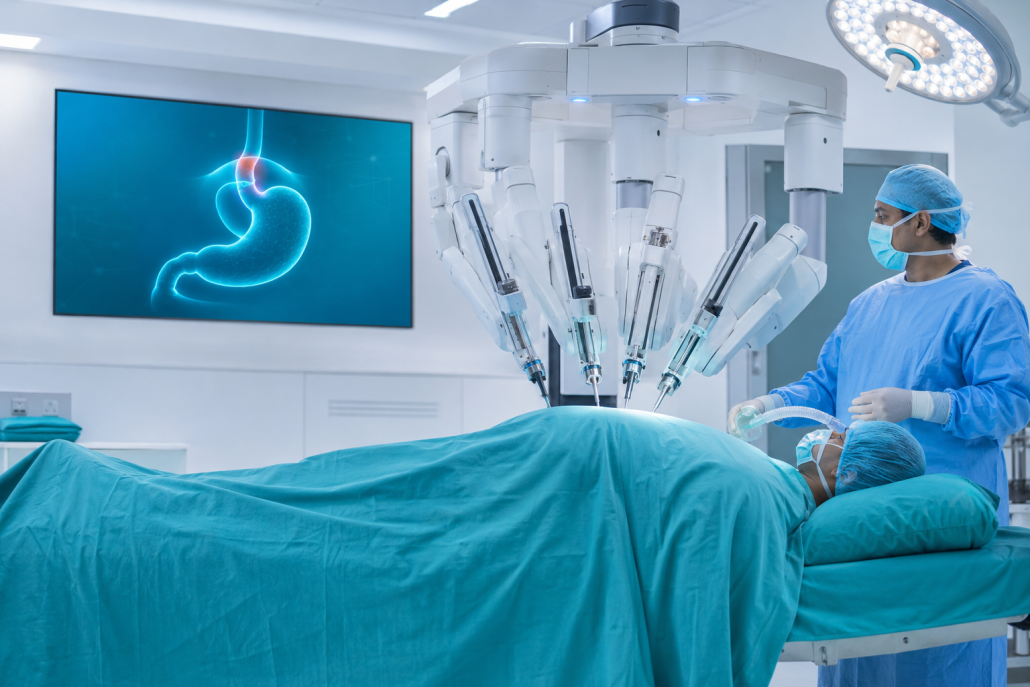
Robotic hiatus hernia repair is performed under general anaesthesia through several small abdominal incisions. The surgeon sits at a console and directly controls every movement of the camera and articulated instruments. The robotic system does not make decisions or operate independently.
Although the exact operation varies, the surgeon generally returns the stomach and hernia contents to the abdomen, carefully separates the hernia sac from structures in the chest, restores an appropriate length of oesophagus below the diaphragm and closes the widened hiatus with sutures. This closure is called a cruroplasty.
An anti-reflux procedure may be added when appropriate. Fundoplication involves wrapping part of the upper stomach around the lower oesophagus to support the reflux barrier. The wrap may be complete or partial depending on symptoms, swallowing function, anatomy and the surgeon’s judgement. In selected cases, gastropexy or another procedure may be considered. Mesh is not automatically required; its possible benefit, material and risks should be discussed individually, especially because evidence does not support routine use in every hiatus hernia repair.
Why May a Robotic Approach Be Considered?
The hiatus is a confined area close to the oesophagus, stomach, diaphragm and important nerves. A robotic platform provides a magnified three-dimensional view and wristed instruments that can help with dissection and suturing in this limited space. These technical features may be useful in selected large, recurrent or anatomically complex repairs.
Potential patient benefits arise from the minimally invasive approach, such as smaller incisions and an earlier return to light activity than may be possible after a large open incision. However, outcomes depend on the diagnosis, complexity, surgical technique, surgeon experience and individual health. Robotic assistance should not be presented as a guarantee of less pain, zero recurrence, a shorter stay or a superior result for every patient.
Learn more about the broader role and limitations of robotic surgery in Pune at DOSS India.
Robotic vs Laparoscopic Hiatus Hernia Repair
Robotic and laparoscopic repair are both minimally invasive operations performed by a surgeon through small incisions. Conventional laparoscopy uses straight instruments while the surgeon stands beside the operating table. Robotic-assisted surgery uses articulated instruments controlled from a console and provides a three-dimensional view.
Current guidance supports choosing between robotic and laparoscopic fundoplication through shared decision-making because both can be appropriate and their overall efficacy and safety are considered similar. Robotic surgery may offer technical advantages for particular anatomy or complex suturing, but it can involve additional equipment, availability and cost. A well-planned laparoscopic repair may be equally suitable for many patients. Open surgery is generally reserved for selected complex situations, emergencies or cases in which a minimally invasive approach is not appropriate.
DOSS India also provides laparoscopic GI surgery in Pune, allowing the technique to be selected according to clinical need rather than technology alone.
Who May Be Considered for Robotic Hiatus Hernia Surgery in Pune?
A consultation for robotic hiatus hernia surgery in Pune may be appropriate for people with objective evidence of a hiatus hernia and symptoms or complications that justify operative treatment. Possible candidates include patients with persistent regurgitation or reflux despite appropriate care, a symptomatic type II, III or IV paraesophageal hernia, swallowing or meal-related symptoms caused by the hernia, a recurrent repair, or anatomy that may benefit from precise minimally invasive dissection and suturing.
Age alone does not decide suitability. Heart and lung health, nutritional status, previous upper abdominal surgery, body weight, swallowing function, medication use and anaesthesia risk must be considered. For people who also live with obesity or have had bariatric surgery, reflux and hiatus hernia planning may require a wider discussion about the most appropriate gastrointestinal or metabolic procedure.
Why Choose DOSS India for Hiatus Hernia Care?
DOSS India is a Pune-based surgical centre focused on bariatric, hernia and minimally invasive gastrointestinal care. The team evaluates both the digestive symptoms and the anatomy of a hiatus hernia before recommending treatment.
Dr. Neeraj Rayate is an MBBS, MS and DNB-qualified laparoscopic and robotic surgeon. His training published by DOSS India includes a fellowship in GI and onco surgery at Athens Medical Center, a fellowship in gynaecological endoscopy in Germany and training in robotic surgery. He is associated with laparoscopic, robotic and bariatric surgical care in Pune.
Dr. Satish Pattanshetti is an MBBS and MS-qualified laparoscopic bariatric and metabolic surgeon with fellowship training in minimal access surgery and bariatric and metabolic surgery. His clinical focus includes minimally invasive gastrointestinal and bariatric procedures.
The availability of robotic, laparoscopic and open techniques supports an individualised recommendation. Patients are encouraged to understand why surgery is being proposed, what the planned procedure includes, which alternatives are reasonable, what recovery may involve and which risks apply to their own case.
Preparing for Robotic Hiatus Hernia Repair
Preparation may include blood tests, cardiac or respiratory assessment, anaesthesia review and optimisation of diabetes, blood pressure, nutrition or other medical conditions. Smoking cessation may be advised because smoking can affect healing and respiratory recovery. The team may also provide a short preoperative diet or fasting instructions based on the procedure and hospital protocol.
Tell the surgeon about blood thinners, diabetes medicines, weight-loss medicines, supplements and allergies. Do not stop prescribed medicines without specific instructions from the surgical or anaesthesia team. Arrange help at home and transport after discharge, and bring all previous GI and surgical records to the appointment.
Recovery After Surgery
Hospital stay and return to work vary according to the size and complexity of the hernia, additional procedures, general health and individual recovery. Patients are usually encouraged to walk early. Pain relief, breathing exercises and blood-clot prevention are provided according to clinical need.
A staged diet is commonly advised while swelling around the repaired hiatus settles. This may begin with liquids and progress to soft foods before a normal diet is reintroduced. Eating slowly, taking small bites and chewing thoroughly can reduce discomfort. Temporary difficulty swallowing, bloating, reduced ability to belch, shoulder-tip pain or early fullness can occur. Persistent or worsening symptoms should be reported rather than managed without advice.
Heavy lifting and strenuous exercise are restricted for a period determined by the surgeon. Follow-up is important to review swallowing, diet progression, reflux control, wounds and medicines. Long-term monitoring may be advised for people with Barrett’s oesophagus, recurrent symptoms or a complex repair.
Possible Risks and Limitations
All surgery has risks, even when performed through small incisions. The consent discussion should reflect the planned procedure and the patient’s health. Relevant risks can include:
Bleeding, infection, blood clots or complications related to anaesthesia
Injury to the oesophagus, stomach, spleen, lungs or nearby nerves and structures
Leakage from the oesophagus or stomach, chest complications or need for additional treatment
Temporary or persistent swallowing difficulty, gas-bloat symptoms or inability to vomit normally
Continued or recurrent reflux, recurrence of the hiatus hernia or need for another operation
Mesh-related complications when mesh is used
Conversion to laparoscopic or open surgery if required for safety
Robotic technology supports the surgeon but does not remove these risks. The expected benefit should be weighed against the alternatives, cost and uncertainties for the individual patient.
Cost of Robotic Hiatus Hernia Surgery in Pune
The cost of robotic hiatus hernia surgery in Pune cannot be confirmed responsibly without assessing the patient and planned procedure. It may vary with the type and size of the hernia, primary or repeat surgery, required investigations, fundoplication or another additional procedure, selective mesh use, robotic instruments, hospital and room category, anaesthesia needs, medical conditions and length of stay.
After evaluation, the team can provide a case-specific estimate and explain what the package includes. Patients may also review general information about hiatus hernia surgery cost in India and fundoplication surgery cost in India. Insurance coverage depends on the policy, diagnosis, waiting period, hospital network and pre-authorisation terms.
What to Expect at Your DOSS India Consultation
The surgeon reviews your symptoms, reflux treatment, medical history, medicines and previous operations.
Available endoscopy, barium swallow, manometry, pH testing and scans are assessed, and additional tests are recommended only when clinically useful.
You receive an explanation of whether surgery is indicated and whether robotic, laparoscopic, open or non-surgical care is more appropriate.
If surgery is planned, the procedure, fundoplication or other components, possible mesh use, alternatives, risks, expected diet and recovery are discussed.
Book a Consultation for Robotic Hiatus Hernia Surgery in Pune
If you have persistent reflux, regurgitation, swallowing difficulty, a large paraesophageal hernia or symptoms after a previous repair, a structured surgical assessment can clarify the cause and available options. Consult the DOSS India team to find out whether robotic hiatus hernia surgery in Pune is suitable for your condition.
DOSS Clinic: OPD No. 5, Jupiter Hospital Lane, 3 Baner-Balewadi Road, Prathamesh Park, Baner, Pune, Maharashtra 411045
Phone: +91 90111 00010 / 020 27992799
Appointments: Contact DOSS India