


 +919011100010
Robotic Umbilical Hernia Surgery in Pune | Doss
DOSS India provides evaluation and surgical planning for adults considering robotic umbilical hernia surgery in Pune. An umbilical hernia appears as a bulge at or near the navel when fat, intestine or another tissue pushes through a weak opening in the abdominal wall. Robotic-assisted repair is a surgeon-controlled minimally invasive option for selected patients; it is not automatically the most suitable approach for every umbilical hernia.
Dr. Neeraj Rayate and Dr. Satish Pattanshetti assess the defect size, symptoms, reducibility, previous operations, tissue quality, general health and activity needs before recommending observation, open repair, laparoscopic repair or robotic-assisted surgery. Patients are told why a particular approach is being considered, whether mesh may be needed, what alternatives are reasonable and what recovery may involve.
Book a hernia consultation: Speak with the DOSS India surgical team for an individual assessment of a navel-area swelling and the treatment options appropriate to your condition.
What Is an Umbilical Hernia?
An umbilical hernia develops through a weakness at the umbilical ring, the area where the umbilical cord passed before birth. In an adult, fatty tissue, a loop of intestine or a hernia sac may push through this opening and produce a visible or palpable swelling at the belly button.
A paraumbilical hernia develops immediately beside the navel rather than directly through it. In everyday healthcare searches, both may be called a navel hernia or umbilical hernia. The exact location and width of the abdominal-wall defect matter when surgery is planned.
An umbilical hernia is different from rectus diastasis. Rectus diastasis is a widening between the two vertical abdominal muscles and does not, by itself, create a true hole in the fascia. The two conditions can occur together, and their relationship may influence the repair strategy.
Patients who want an overview of other abdominal-wall hernias can read about hernia treatment in Pune at DOSS India.
Common Symptoms of an Umbilical Hernia
The most recognisable sign is a bulge in or beside the navel. It may be easier to see while standing, coughing, lifting or straining and may become less obvious when lying down. Some hernias remain soft and painless, while others gradually become uncomfortable or difficult to reduce.
Symptoms can include:
- A round swelling at or close to the belly button
- Aching, pressure, burning or a pulling sensation around the navel
- Discomfort during coughing, bending, lifting, exercising or prolonged standing
- A bulge that has gradually increased in size
- Tenderness when clothing or a belt presses on the area
- A swelling that no longer becomes smaller on lying down
- Symptoms after a previous umbilical hernia repair
Not every navel swelling is a hernia. A lipoma, cyst, scar-related change, abdominal-wall tumour or another condition can sometimes appear similar. A clinical examination is important before treatment is planned.
Why Do Adults Develop Umbilical Hernias?
Adult umbilical hernias develop when the tissue around the navel weakens or widens while pressure from inside the abdomen pushes against it. The condition is often influenced by more than one factor rather than a single event.
Factors associated with an adult umbilical or paraumbilical hernia include weight gain or obesity, previous pregnancy, repeated pregnancies, chronic cough, constipation and straining, fluid accumulation in the abdomen, heavy physical work, and age-related changes in abdominal-wall tissue. A previous operation near the navel may also affect the local fascia.
Heavy lifting can make an existing bulge more noticeable, but it is not always the sole cause of the underlying weakness. Identifying cough, constipation, smoking, diabetes, nutritional concerns or weight-related risk can help with preparation and long-term care.
Can an Adult Umbilical Hernia Heal Without Surgery?
An adult umbilical hernia does not usually close permanently on its own. Medicines may reduce pain, cough, acidity or constipation, but they cannot repair the opening in the abdominal wall. An abdominal support belt may provide temporary comfort for some people, but it should not be presented as a cure.
This does not mean that every small, painless hernia requires immediate surgery. Observation may be reasonable for carefully selected adults when the diagnosis is clear, symptoms are minimal and the surgeon has explained what changes should prompt reassessment. Surgery is more likely to be considered when the hernia causes pain, enlarges, interferes with routine activity, becomes difficult to reduce, contains trapped tissue or returns after a previous repair.
The timing of repair should reflect symptoms, defect characteristics, general health, occupation, pregnancy plans, anaesthesia risk and patient preference. A consultation is intended to decide whether an operation is needed, not simply to select a surgical machine.
How Is an Umbilical Hernia Diagnosed?
Diagnosis usually starts with a medical history and physical examination. The surgeon may examine the abdomen while the patient is standing and lying down and may ask the patient to cough or gently strain. This helps assess the location and approximate size of the defect, whether the swelling is reducible, whether there is tenderness and whether rectus diastasis or more than one defect is present.
Imaging is not necessary for every obvious, uncomplicated umbilical hernia. Ultrasound may help when the swelling is small, the examination is uncertain or another condition must be excluded. CT imaging may be advised for a large, recurrent or complex hernia, previous mesh, multiple suspected defects, significant rectus diastasis or abdominal-wall reconstruction planning.
Preoperative testing may also include blood tests, ECG, chest assessment and anaesthesia evaluation according to age, medicines and medical history. Previous scans, operative notes and mesh details are useful when a hernia has returned.
What Is Robotic Umbilical Hernia Repair?
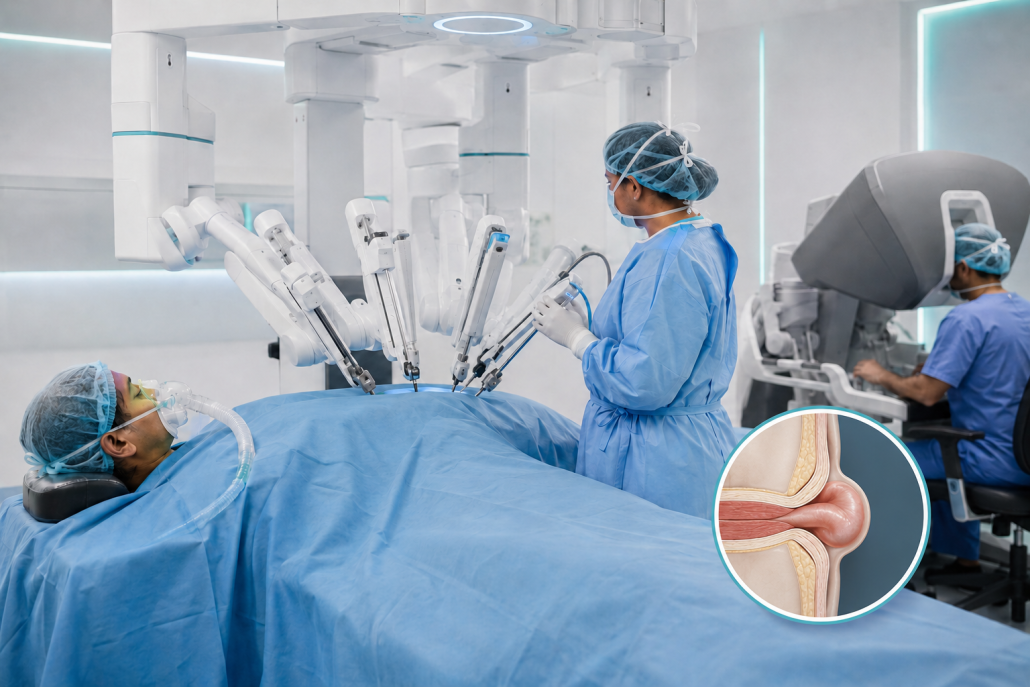
Robotic umbilical hernia repair is a form of minimally invasive surgery performed through several small abdominal incisions. The surgeon sits at a console and directly controls the camera and articulated instruments throughout the operation. The robot does not diagnose the hernia, make decisions or operate independently.
The platform provides a magnified three-dimensional view and instruments that bend at the tip. These features can assist precise dissection and suturing of the abdominal wall in selected cases. The clinical value depends on the defect, the chosen repair technique, surgeon experience and the patient’s health; the presence of robotic technology alone does not guarantee a better result.
Learn more about the role and limitations of robotic surgery in Pune at DOSS India.
What Happens During Robotic Umbilical Hernia Surgery?
The operation is generally performed under general anaesthesia. Port positions and the exact repair vary according to the defect, previous surgery and mesh plan. In a typical procedure, the surgeon carefully returns the hernia contents to the abdominal cavity, frees the hernia sac when required and inspects the surrounding abdominal wall.
The fascial opening is usually closed with sutures when the anatomy permits. Mesh may then be placed to reinforce the repair when clinically appropriate. Depending on the planned technique, the mesh may be positioned in a preperitoneal, retromuscular or another suitable plane. Mesh type, size, overlap and fixation are selected for the individual case; no single product or position is correct for every patient.
The surgeon may identify additional small defects or associated rectus diastasis during planning or surgery. Whether these require treatment should be discussed rather than assumed. If scar tissue, bowel involvement, bleeding or another safety issue makes the planned approach unsuitable, the operation may need to be modified or converted to laparoscopic or open surgery.
When May a Robotic Approach Be Considered?
A robotic approach may be discussed when minimally invasive access is clinically appropriate and the planned operation would benefit from articulated suturing or detailed work in the layers of the abdominal wall. Examples can include selected larger defects, recurrent hernias, more than one nearby defect, an associated abdominal-wall problem or a repair in which an extraperitoneal mesh position is being considered.
Robotic assistance may also be considered when a patient has factors that make wound complications an important concern, although the complete risk profile still needs review. A small, straightforward primary umbilical hernia may be treated effectively through a limited open incision, and conventional laparoscopy may be appropriate for other patients.
The decision should consider expected benefit, operating time, equipment availability, cost, anaesthesia fitness and surgeon experience. Robotic umbilical hernia surgery in Pune should be recommended because it suits the individual repair plan, not simply because the technology is available.
Robotic vs Laparoscopic vs Open Umbilical Hernia Repair
Open repair is performed through an incision at or near the navel. It provides direct access to the defect and remains an appropriate option for many primary umbilical hernias. The incision size and whether mesh is used depend on the defect and chosen technique.
Laparoscopic repair uses a camera and long, straight instruments introduced through small incisions away from the hernia. It can provide a broad view of the abdominal wall and may be considered for selected larger, recurrent or multiple defects and for some patients at increased risk of wound problems.
Robotic repair is also minimally invasive but uses articulated instruments controlled from a console. It can facilitate intracorporeal suturing and selected extraperitoneal or retromuscular techniques. It may require additional equipment, availability and cost, and current evidence does not justify describing it as universally superior to laparoscopic or open repair.
Recognised guidance for symptomatic umbilical and epigastric hernias supports mesh reinforcement to reduce recurrence in many adults and notes that most can be repaired through an open preperitoneal approach. A minimally invasive approach may be considered for larger defects or when wound morbidity is a particular concern. The practical conclusion is that the repair should be tailored rather than predetermined.
DOSS India also provides laparoscopic GI surgery in Pune, allowing the surgical approach to be selected according to clinical need.
Is Mesh Always Required?
No. Mesh is commonly used in adult umbilical hernia repair because reinforcement can reduce tension and lower the chance of recurrence compared with suture-only repair in many situations. However, the recommendation depends on defect size, whether the hernia is primary or recurrent, tissue quality, contamination risk, associated conditions and the planned surgical approach.
For a very small defect, suture repair may be discussed in selected circumstances. For other defects, mesh reinforcement may offer a more durable repair. Patients should be told why mesh is or is not recommended, where it is intended to be placed, what alternatives exist and which risks are relevant. Possible mesh-related problems include infection, fluid collection, persistent discomfort, adhesion or the need for further treatment, although these do not occur in every patient.
Who May Be Considered for Robotic Umbilical Hernia Surgery in Pune?
A consultation may be appropriate for an adult with a confirmed umbilical or paraumbilical hernia that is painful, enlarging, limiting activity, difficult to reduce or recurrent. Robotic repair may be considered when the anatomy and repair plan are suitable for minimally invasive suturing and reinforcement.
Suitability is not decided by hernia size alone. The surgeon considers age, body weight, diabetes, smoking, heart and lung health, blood-thinning medicines, previous abdominal surgery, pregnancy plans, rectus diastasis, work demands and anaesthesia risk. People with severe obesity may benefit from a broader discussion about weight-related surgical risk and whether staged treatment or obesity treatment in Pune should be considered.
Pregnant patients, people planning pregnancy soon and those who recently delivered require individual advice about timing because another pregnancy can place renewed pressure on the repair. Emergency symptoms require urgent assessment regardless of pregnancy plans.
Why Choose DOSS India for Umbilical Hernia Care?
DOSS India is a Pune-based surgical centre focused on hernia, bariatric and minimally invasive gastrointestinal care. The team evaluates the diagnosis and the complete abdominal wall before recommending a technique.
Dr. Neeraj Rayate is an MBBS, MS and DNB-qualified laparoscopic and robotic surgeon. His training listed by DOSS India includes a fellowship in GI and onco surgery, fellowship training in endoscopic surgery and training in robotic surgery.
Dr. Satish Pattanshetti is an MBBS and MS-qualified laparoscopic bariatric and metabolic surgeon with fellowship training in minimal access and bariatric surgery. Dr. Rayate and Dr. Pattanshetti contribute complementary experience when a hernia case would benefit from collaborative planning.
The availability of open, laparoscopic and robotic approaches allows the recommendation to begin with the patient’s needs rather than a single technology. Patients are encouraged to understand the diagnosis, proposed mesh position, alternatives, expected recovery, relevant risks and likely cost before giving consent. Read more about DOSS India and its surgical team.
Preparing for Robotic Umbilical Hernia Repair
Preparation begins with confirming the diagnosis and optimising health conditions that can affect anaesthesia, wound healing or recurrence. The surgeon may advise better control of diabetes, treatment of chronic cough or constipation, nutritional review, smoking cessation or weight management when relevant. These steps are part of safer planning and should not be treated as blame for the hernia.
Tell the surgical team about blood thinners, diabetes medicines, weight-loss medicines, supplements, allergies and previous reactions to anaesthesia. Do not stop prescribed medication without instructions from the surgeon or anaesthetist. Follow the hospital’s fasting advice and arrange transport and help at home after discharge.
Bring previous ultrasound or CT images, operative notes and implant information if the hernia has been repaired before. Ask which technique is planned, whether mesh is expected, whether the defect will be closed, what could change the plan during surgery and which costs are included.
Recovery After Surgery
Recovery varies with the defect size, repair technique, mesh position, previous surgery, general health and type of work. Some patients may be discharged on the day of surgery or after a short stay, while a more complex repair may require longer observation. A personalised estimate is more useful than a fixed promise.
Early walking is usually encouraged. Pain relief, wound care, breathing exercises and blood-clot prevention are provided according to clinical need. Temporary bruising, swelling, pulling discomfort or a fluid collection called a seroma can occur around the previous hernia site. A small residual contour does not always mean the repair has failed, but new or worsening swelling should be reviewed.
Patients should follow individual instructions about bathing, driving, office work, exercise and lifting. Return to work depends on comfort, the physical demands of the job and the surgeon’s advice. Heavy lifting should not be resumed simply because the external incisions look healed. Follow-up is used to assess wounds, pain, abdominal-wall function and gradual return to activity.
Possible Risks and Limitations
All hernia operations have risks, including minimally invasive procedures. The consent discussion should be specific to the patient and planned repair. Relevant risks may include:
- Bleeding, infection, blood clots or complications related to general anaesthesia
- Seroma, bruising, wound problems or temporary abdominal-wall discomfort
- Injury to the bowel, blood vessels, bladder or another nearby structure
- Urinary retention, ileus or delayed return of bowel function
- Persistent pain, altered sensation or discomfort at a fixation or port site
- Mesh infection, adhesion, migration or another mesh-related complication when mesh is used
- Hernia recurrence or the development of another abdominal-wall defect
- Conversion to laparoscopic or open surgery when needed for safety
- Need for additional treatment or another operation
Robotic technology may assist the surgeon technically, but it cannot eliminate surgical risk, guarantee a painless recovery or ensure that a hernia will never recur.
Cost of Robotic Umbilical Hernia Surgery in Pune
The cost of robotic umbilical hernia surgery in Pune cannot be confirmed responsibly without examining the patient and defining the operation. Cost may vary with the defect size, primary or recurrent repair, number of defects, required imaging, mesh type and position, robotic consumables, hospital and room category, anaesthesia needs, medical conditions and length of stay.
After assessment, the team can provide a case-specific estimate and explain what is included. Insurance coverage depends on the policy, diagnosis, waiting period, hospital network and pre-authorisation terms. Patients should avoid choosing a technique only from an advertised package price because two apparently similar navel hernias may require different repairs.
What to Expect at Your DOSS India Consultation
The surgeon reviews the swelling, symptoms, medical conditions, medicines, previous operations and activity needs.
The abdomen is examined to confirm the defect, reducibility, tenderness, rectus diastasis and possible additional hernias.
Existing scans are reviewed, and ultrasound or CT is requested only when it will answer a useful clinical question.
You receive an explanation of whether observation or surgery is appropriate and whether open, laparoscopic or robotic repair is a reasonable option.
If surgery is planned, the expected defect closure, possible mesh use and position, alternatives, risks, recovery and estimated cost are discussed.
Book a Consultation for Robotic Umbilical Hernia Surgery in Pune
If you have a painful or enlarging bulge near the navel, a hernia that is difficult to reduce or a swelling that has returned after repair, a structured surgical assessment can clarify the diagnosis and available options. Consult the DOSS India team to find out whether robotic umbilical hernia surgery in Pune is suitable for your condition or whether another approach would be more appropriate.
DOSS Clinic: OPD No. 5, Jupiter Hospital Lane, 3 Baner-Balewadi Road, Prathamesh Park, Baner, Pune, Maharashtra 411045
Phone: +91 90111 00010 / 020 27992799
Appointments: Contact DOSS India