


 +919011100010

Gallbladder Polyps vs Gallstones: What Is the Difference and When Is Gallbladder Removal Needed?
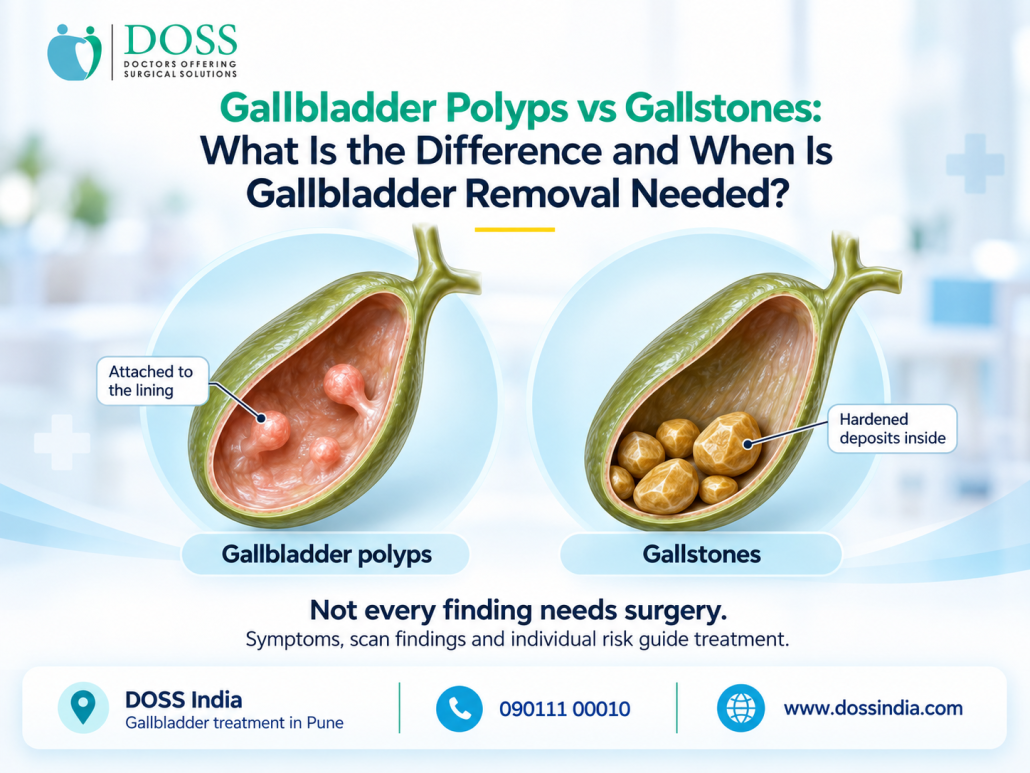
Gallbladder polyps are growths attached to the gallbladder lining, while gallstones are hardened deposits that form inside it. Neither finding automatically means you need surgery. Gallstones usually require treatment when they cause symptoms or complications. Decisions about polyps depend on their size, appearance, growth and individual risk factors. Understanding what your ultrasound actually shows is the first step towards choosing appropriate care.
What Are Gallbladder Polyps and Gallstones?
The gallbladder is a small organ beneath the liver that stores bile, a fluid involved in digestion. Gallstones form when substances in bile, such as cholesterol or bilirubin, harden into solid material. There may be one stone or several, and their sizes can vary considerably.
Polyps project from the gallbladder’s inner lining. Many small polyps are cholesterol deposits rather than true tumours. Most are benign, meaning non-cancerous, but some types need closer assessment because they may have cancerous potential. The word “polyp” on a report does not, by itself, mean cancer.
| Feature | Gallbladder polyps | Gallstones |
| What they are | Growths or deposits attached to the lining | Hardened material formed from bile |
| Main concern | Whether the appearance suggests a potentially harmful growth | Whether stones cause pain, blockage or inflammation |
| Treatment decision | Based on size, appearance and patient risk factors | Usually based on symptoms and complications |
These differences explain why two people with gallbladder findings may receive different recommendations.
Can Symptoms Tell You Which One You Have?
Not reliably. Both findings may be discovered during a scan performed for another reason.
Gallstones can cause pain in the upper-right abdomen when they block bile flow. An attack may last several hours and sometimes follows a heavy meal. However, many people have gallstones without any symptoms.
Small polyps usually do not cause symptoms. If you have bloating, acidity or abdominal discomfort alongside a polyp, the polyp may not explain the problem. Other causes should be considered before surgery is recommended for symptom relief. Removing the gallbladder does not guarantee that unrelated digestive symptoms will disappear.
How Do Doctors Confirm the Difference?
An abdominal ultrasound is usually the starting point. It can identify gallstones and assess a suspected polyp’s size and appearance. For an uncertain polyp finding, specialist imaging may sometimes help, but additional scans are not routinely necessary for everyone.
Bring previous ultrasound reports and, if available, the images themselves. Ask whether the finding is clearly a polyp, whether there are stones as well, and whether the gallbladder wall or bile ducts look abnormal.
Blood tests may help detect inflammation or problems involving the liver, gallbladder or pancreas. If a bile-duct stone is suspected, further imaging may be needed. The investigation depends on the symptoms and initial findings.
When Do Gallstones Need Gallbladder Removal?
Stones found incidentally without symptoms usually do not require an operation. Your doctor may recommend observation after considering your circumstances.
When stones cause typical pain attacks, gallbladder removal is commonly offered to prevent further episodes. Inflammation, infection or gallstone-related pancreatitis also changes the treatment plan. A stone in the main bile duct may require an endoscopic procedure to clear the duct as part of treatment.
The usual operation removes the gallbladder rather than only the stones. This procedure is called cholecystectomy and is often performed through small abdominal incisions.
When Do Gallbladder Polyps Need Surgery?
Polyp management requires more than checking one measurement. European joint guidelines recommend removal for polyps measuring 10 mm or more when the patient is fit for surgery and agrees.
They also recommend considering removal for 6–9 mm polyps with specified risk factors. These include age over 60, Asian ethnicity, primary sclerosing cholangitis, a condition affecting bile ducts, and a broad-based polyp or concerning local wall thickening. These criteria require specialist interpretation rather than self-diagnosis.
Guidelines differ. The Society of Radiologists in Ultrasound uses appearance-based categories and recommends surgical consultation at 15 mm for many lower-risk incidental polyps, with different thresholds for concerning findings. Therefore, an online size cut-off cannot determine your treatment on its own.
Smaller polyps may need repeat ultrasound or no follow-up, depending on their risk profile. Ask for a clear monitoring schedule and an explanation of what changes would alter the plan.
Which Symptoms Need Urgent Medical Attention?
Seek urgent care if you develop:
- Severe abdominal pain or pain lasting several hours.
- Abdominal pain with fever, chills or repeated vomiting.
- Yellow skin or eyes, particularly with dark urine or pale stools.
These symptoms may indicate blockage, infection or inflammation. Severe pain with fever or jaundice warrants emergency assessment rather than waiting for a routine appointment.
What Should You Know About Gallbladder Removal?
People can generally live normally without a gallbladder because the liver continues making bile. Surgery nevertheless has risks, including infection, blood clots, bile leakage and injury to nearby structures or bile ducts. Some people experience diarrhoea or ongoing digestive symptoms afterwards. Your surgeon should explain the expected benefit and individual risks before you decide.
Frequently Asked Questions
Does a growing polyp always mean cancer?
No. Growth needs review, but benign polyps can grow too. Doctors consider the current size, appearance, growth pattern and patient risk factors together. A small measurement change alone does not establish cancer.
Can medicines dissolve gallstones?
Medicines may be used for selected cholesterol stones when surgery is unsuitable, but treatment can take months or years and stones may return. They are not a routine substitute for surgery when stones cause significant problems.
Can I have polyps and gallstones together?
Yes. Finding one does not exclude the other. The doctor needs to assess both findings and determine whether symptoms, stone-related complications or polyp characteristics justify treatment.
Planning Gallbladder Treatment in Pune
For guidance on Gallbladder treatment in Pune, consult DOSS India with your ultrasound reports, blood tests and symptom history. An individual assessment can clarify whether observation, further investigation or gallbladder removal is appropriate.
#dossindia #gallbladdertreatmentinpune #gallbladderpolyps #gallstones #gallbladdersurgery

Leave a Reply
Want to join the discussion?Feel free to contribute!