


 +919011100010

Can Weight Loss Surgery Help Sleep Apnoea? What Changes After Significant Weight Loss?
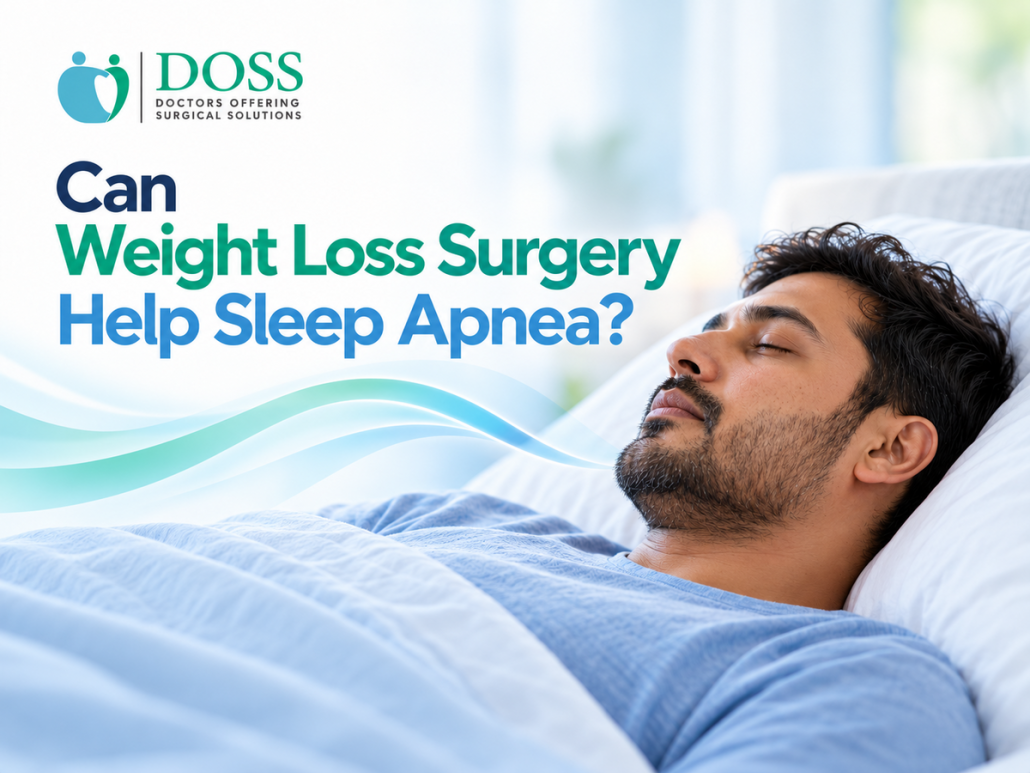
Weight loss surgery can improve obstructive sleep apnea in people with obesity, but it does not guarantee that the condition will disappear. Significant weight loss may reduce breathing interruptions during sleep, while some patients continue to need treatment. If you use a CPAP machine, continue your prescribed treatment until your sleep specialist reassesses you. Feeling better or snoring less is not enough to confirm that sleep apnea has resolved.
How Are Obesity and Sleep Apnea Connected?
Obstructive sleep apnea, or OSA, happens when the upper airway repeatedly narrows or becomes blocked during sleep. Breathing may pause or become shallow, disturbing sleep and sometimes lowering oxygen levels.
Obesity can contribute because extra fat around the neck can narrow the airway. However, weight is not the only factor. The size of the tongue and tonsils, age, family history and other features can also affect breathing during sleep.
This article focuses on obstructive sleep apnea. Central sleep apnea is different: it involves problems with the brain’s control of breathing. Benefits reported for obesity-related OSA should not automatically be applied to central sleep apnea.
What Can Change After Significant Weight Loss?
When excess weight contributes to airway narrowing, weight reduction can improve breathing during sleep. Bariatric surgery studies show reductions in the frequency of breathing disturbances, although the amount of improvement varies.
Doctors often assess severity using the apnea–hypopnea index, or AHI. This records the number of breathing pauses and episodes of reduced breathing per hour of sleep. A lower score after treatment can show improvement, but it does not necessarily mean the condition has completely resolved.
A 2023 review of 32 studies involving 2,310 patients found that bariatric surgery was associated with substantial improvement in OSA severity. Remission was reported in approximately 65% of patients across the included studies. This pooled result is not an individual prediction: procedures, patient characteristics and follow-up differed, and a substantial proportion still had sleep apnea.
Why Might Sleep Apnea Continue After Surgery?
Weight loss does not change every feature that contributes to airway obstruction. Someone may still have a naturally narrow airway, a large tongue or other anatomical factors after losing considerable weight. OSA can therefore remain even when the operation achieves meaningful weight reduction.
Continuing to need CPAP does not mean surgery has failed. Weight management and sleep apnea treatment address related but different needs. Your care plan should be based on your breathing results and overall health, rather than whether you can stop using a machine.
Can You Stop CPAP Once You Lose Weight?
Do not stop CPAP or change its settings yourself. CPAP stands for continuous positive airway pressure. It delivers air through a mask to help keep the airway open while you sleep. Weight loss may change your treatment needs, but this requires professional review.
If the mask becomes uncomfortable, leaks more or the pressure feels difficult to tolerate, contact your sleep team. These problems are reasons to review the equipment and treatment, not to assume it is no longer needed.
Untreated sleep apnea can affect concentration and daytime functioning and is associated with cardiovascular health risks. Maintaining effective treatment remains important while your weight and health change.
When Should You Repeat a Sleep Study?
There is no single testing date that suits everyone after bariatric surgery. Your specialist considers the amount of weight change, symptoms, current treatment and whether the result would change your care.
American Academy of Sleep Medicine guidance supports considering repeat testing after clinically significant weight loss or gain. Depending on your circumstances, this may involve an overnight laboratory study or an appropriate home sleep apnea test.
Keep your original sleep report and record changes in weight, sleep quality and daytime sleepiness. Bring your CPAP details to follow-up. A symptom diary can help the clinician understand your progress, but it does not replace testing when reassessment is needed.
Who May Be Considered for Weight Loss Surgery?
Snoring alone is not a reason to have bariatric surgery. Suspected sleep apnea should be assessed, and a sleep study can establish its type and severity.
A bariatric assessment considers obesity severity, related illnesses, previous treatments, surgical risks and readiness for long-term follow-up. Sleep apnea can form part of that assessment. AASM guidance recommends discussing bariatric referral with adults who have OSA, a BMI of at least 35 and difficulty accepting or tolerating CPAP. Referral means discussing options, not an automatic recommendation for an operation.
Surgery also involves risks and commitments, including possible bleeding, infection and nutritional deficiencies. These must be weighed against expected benefits. Non-surgical weight management and direct sleep apnea treatments remain appropriate options for many people.
What Matters Before and Immediately After Surgery?
Tell the surgeon and anaesthetist about diagnosed or suspected sleep apnea. Bring your sleep report and ask whether to bring your CPAP equipment to hospital.
OSA affects planning for anaesthesia, pain medicines and postoperative monitoring. Breathing support may still be necessary immediately after the operation because weight-related improvement is not instant. The hospital team should provide an individual plan for recovery.
Frequently Asked Questions
If I stop snoring, does that mean sleep apnea is gone?
No. Reduced snoring is encouraging, but it cannot confirm normal breathing throughout sleep. Treatment changes should follow clinical assessment and repeat testing when appropriate.
Can sleep apnea worsen if weight returns?
Yes, weight gain can increase airway-related risk. Report returning symptoms and significant weight changes so your clinician can decide whether reassessment is needed.
Can weight loss without surgery also help?
Yes. Weight management can help obesity-related OSA without an operation. It should be combined with prescribed sleep apnea treatment while your response is monitored.
Discussing Obesity Surgery in Pune
If obesity and sleep apnea are affecting your health, consult DOSS India to discuss whether Obesity surgery in Pune is appropriate. Bring your sleep study and treatment history. Planning should include both long-term weight management and coordination with your sleep specialist.
#dossindia #obesitysurgeryinpune #sleepapnea #bariatricsurgery #obesitycare
Leave a Reply
Want to join the discussion?Feel free to contribute!