


 +919011100010

When Can You Drive After Hernia Surgery? Signs You Are Ready to Get Behind the Wheel
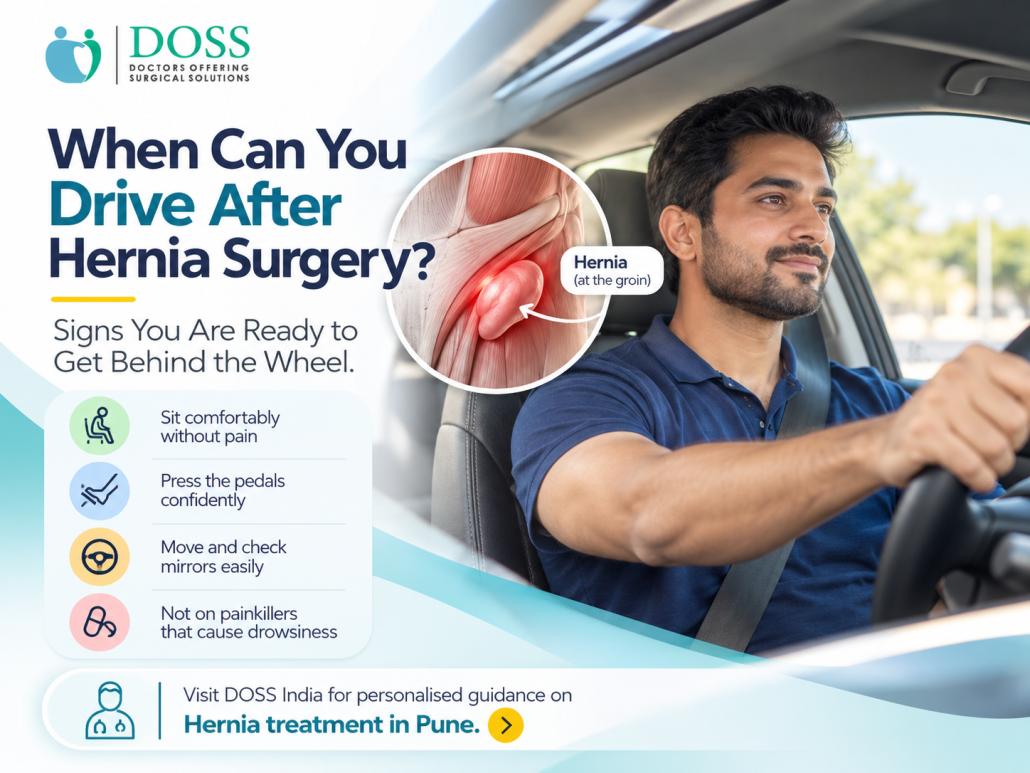
Driving often feels like an important step towards getting back to normal after hernia surgery. Whether you need to commute, take children to school or attend appointments, you may wonder how soon you can safely return to the driver’s seat.
Many people recovering from an uncomplicated inguinal hernia repair can consider driving after about one to two weeks. However, this is a general guide, not a deadline. You should be comfortable performing an emergency stop quickly and safely, without pain limiting your response. Your surgeon’s instructions take priority.
Why There Is No Fixed Date for Driving Again
Hernia operations differ in their location, size and complexity. Recovery after a straightforward groin hernia repair may differ from recovery after a larger abdominal or recurrent hernia operation.
The surgical approach also matters, but having small incisions does not automatically mean you are ready to drive. Your comfort, movement, concentration and medicines all need consideration.
When planning your recovery, tell your surgeon what driving involves for you. A short local journey and several hours of professional driving place different demands on your body. Ask for advice that reflects your usual routine.
Why You Cannot Drive Yourself Home
Arrange for someone to collect you after surgery. Being well enough to leave hospital does not mean you are fit to drive.
General anaesthesia can temporarily affect coordination and judgement. Restrictions commonly cover the first 24 to 48 hours, depending on the hospital’s instructions and your circumstances. Follow the specific period your team gives you. Passing that initial period does not automatically make driving safe if pain or restricted movement continues.
Plan transport for early follow-up appointments too, so you do not feel pressured to drive before you are ready.
Signs You May Be Ready to Drive
Before returning to the road, discuss these practical checks with your surgical team:
- Getting in and out: You can enter and leave the car without significant pain or difficulty.
- Sitting comfortably: You can maintain your normal driving position and wear the seatbelt correctly.
- Looking around: You can turn to check mirrors and blind spots without pain restricting movement.
- Using the controls: You can steer, change gears and operate the pedals confidently.
- Braking promptly: You can apply the brake firmly without pain, hesitation or protecting the operated area.
- Staying alert: You are free from dizziness, drowsiness and distracting discomfort.
The central requirement is being able to control the vehicle safely, including during an unexpected stop. Also check whether your motor insurance policy has any requirements following surgery.
How to Think About the Emergency Stop Check
Comfort during ordinary sitting is only part of the picture. Sudden braking requires a faster, firmer movement than gently pressing a pedal.
A stationary car, securely parked with the engine off, can help you notice whether reaching the controls or turning causes discomfort. However, this is only a preliminary movement check. It cannot establish that your reactions are safe in traffic.
Do not attempt an emergency stop on a public road to test your recovery. If you are unsure whether pain could make you hesitate, ask your surgeon before driving.
Can You Drive While Taking Painkillers?
Some pain medicines can make driving unsafe. Codeine, for example, can cause sleepiness and tiredness. You should not drive if you experience these effects.
Check every medicine you are taking, including combination painkillers and any medicines prescribed for sleep or other conditions. Ask your doctor or pharmacist whether they affect driving and how long you should wait after taking them.
Do not skip prescribed medicine simply to attempt a journey. If you still need medication that affects alertness, arrange another driver and discuss your pain management with your team.
Planning Your First Journey
Once you meet the readiness criteria and your surgeon’s restrictions have ended, choose a short, familiar route for your first drive.
Allow extra time and avoid making an essential or lengthy journey your first attempt. Adjust your seat before starting, and make sure you can wear your seatbelt normally.
If pain or fatigue develops, pull over safely and arrange help. For professional drivers, discuss driving duration, breaks and any lifting responsibilities separately before returning to a full shift.
Symptoms That Need Medical Attention
Contact your surgical team promptly if you develop worsening abdominal pain or swelling, fever, wound redness or discharge, persistent vomiting, or difficulty passing urine.
Chest pain or severe breathing difficulty needs emergency assessment. Do not drive yourself to seek emergency care. Arrange an ambulance or appropriate assistance.
Frequently Asked Questions
Can I travel as a passenger before I can drive?
Usually, yes. Patients commonly return home as passengers after discharge. Follow your team’s travel advice, wear your seatbelt correctly and discuss longer journeys before leaving hospital.
Does an automatic car mean I can drive sooner?
An automatic removes the need to operate a clutch, but you still need comfortable movement, safe braking and full alertness. It does not provide an automatic exemption from your recovery instructions.
Should I wait until my follow-up appointment?
Follow the advice given at discharge. If your surgeon requests a review before driving, wait for it. If the instructions are unclear, contact the team rather than choosing a date yourself.
Returning to Driving With Confidence
The right time to drive depends on how safely you can respond behind the wheel. Give yourself time to recover and obtain advice tailored to your operation.
For personalised guidance on Hernia treatment in Pune, consult DOSS India and discuss your recovery needs, including when to resume driving.
#herniatreatmentinpune #herniasurgery #herniarecovery #drivingaftersurgery #dossindia



Leave a Reply
Want to join the discussion?Feel free to contribute!