


 +919011100010
Can You Fast During Navratri After Bariatric Surgery? What to Discuss With Your Surgeon
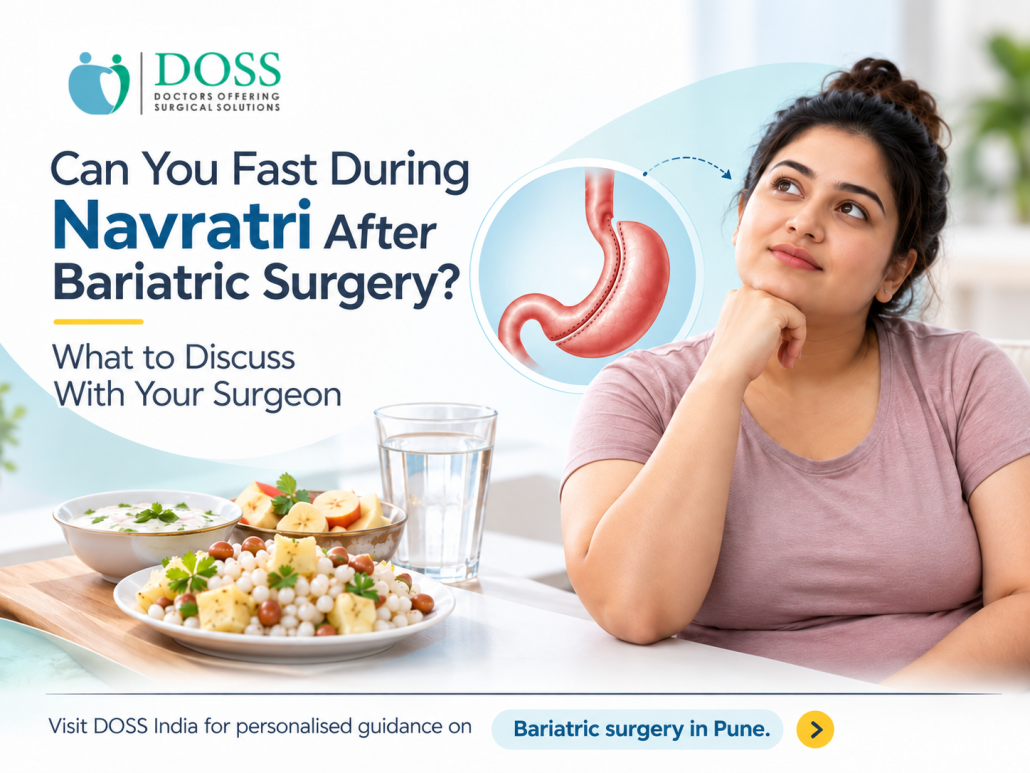
Navratri fasting is not automatically safe after bariatric surgery, particularly during early recovery or when it restricts fluids, protein or prescribed medicines. Some people may be able to follow a modified observance after assessment, while others should avoid fasting. Before changing your routine, explain your intended fasting pattern to your surgeon and bariatric dietitian. Advice must account for your operation, recovery, nutritional intake and current health.
Explain What Your Navratri Fast Will Involve
Start with the practical details rather than simply asking, “Can I fast?” Tell your team whether you plan to avoid particular foods, eat only once daily, skip meals or go without water. Also explain how many days you intend to follow these restrictions.
These plans place different demands on your body. Applying postoperative nutrition principles, an observance that preserves regular fluids and adequate nutrition is different from prolonged food and fluid restriction. Neither should be assumed suitable without reviewing your needs.
Your clinician can help assess the medical risks. If changes are needed, you may also wish to discuss an alternative observance with a trusted religious adviser.
How Soon After Surgery Can You Consider Fasting?
Early recovery is a time for healing and following your prescribed progression from liquids to other food textures. Festival foods should not replace that plan before your team confirms they are appropriate.
Some NHS bariatric services advise against Ramadan fasting during the first 12–18 months after surgery. This advice concerns prolonged fasting and cannot be treated as a directly tested Navratri rule. It does, however, highlight concerns about restricted intake after bariatric procedures. Reaching a particular month after surgery does not automatically make fasting safe.
Someone still struggling to meet fluid or protein requirements needs a different discussion from someone with stable intake and uncomplicated recovery.
Why Is Fluid Restriction a Concern?
After surgery, drinking often involves regular small sips rather than large amounts at once. Avoiding water for long periods can make it difficult to meet your daily needs. Trying to compensate by drinking a large volume quickly may be uncomfortable.
Ask your team to confirm your fluid target and how to meet it throughout the day. This is especially relevant if you also have kidney or heart problems that affect fluid advice.
Heat, sweating during garba or other activity, vomiting and diarrhoea can increase fluid losses. Dark urine, passing less urine, dry mouth and dizziness can indicate dehydration. Do not dismiss these changes as an expected part of fasting.
Can Navratri Foods Meet Your Protein Needs?
Protein supports healing and helps preserve muscle during weight loss. A fasting menu should therefore be reviewed for what it provides, not just whether the foods are permitted in your tradition.
If your observance permits dairy and you tolerate it, ask about suitable portions of plain high-protein yoghurt, milk or paneer. These are possible discussion points, not a universal meal plan. Your dietitian can check food texture, portions and whether your prescribed protein supplement remains necessary.
Write down the actual dishes you intend to eat, including sabudana preparations, potatoes, fruit, sweets and drinks. This allows your dietitian to identify gaps and suggest adjustments. A fruit-only plan should not be assumed to meet postoperative protein needs.
Why Can a Large Meal After Fasting Cause Problems?
Your postoperative eating plan usually involves controlled portions, slow eating and thorough chewing. Compressing the day’s intake into one large meal can make these habits difficult to maintain.
After stomach surgery, some people develop dumping syndrome, where food moves too quickly into the small intestine. Symptoms may include cramps, diarrhoea, nausea, sweating or light-headedness soon after eating. Later episodes can involve low blood sugar one to three hours after a meal.
This meal-related problem is different from low blood sugar caused by missing meals while taking certain diabetes medicines. Tell your team about both types of episodes if you have experienced them.
What Should You Ask Your Surgeon Before Navratri?
Take your planned menu, medicine list and recent blood reports to the appointment. Useful questions include:
- Does my recovery and current intake make fasting unsuitable?
- Can my planned meals meet my protein and fluid requirements?
- How should prescribed medicines and supplements fit into the day?
- Which symptoms mean I should stop fasting and seek help?
Do not skip supplements or combine all doses into one sitting without advice. Some supplements need to be spaced apart for absorption. Similarly, changes to diabetes medicines require a prescriber’s plan rather than your own adjustment.
When Should You Stop Fasting and Seek Help?
Stop fasting if you develop concerning dizziness, shaking, sweating, unusual weakness or signs of dehydration. If you have diabetes, check your glucose if possible and follow your prescribed hypoglycaemia treatment plan. Do not delay treating low blood sugar to continue a fast.
Repeated vomiting, inability to keep fluids down or severe abdominal pain needs urgent assessment. Collapse, seizures, significant confusion or difficulty waking someone requires emergency help. Do not give food or drink to someone who is unconscious.
Frequently Asked Questions
Is fasting safer after a sleeve than after gastric bypass?
Neither operation makes fasting automatically safe. Both reduce the amount you can comfortably consume, and individual complications or nutritional difficulties matter. Your team should assess your procedure and current health together.
Can I fast if I drink water throughout the day?
Allowing water addresses one concern, but protein, meal timing, medicines and supplements still need consideration. Hydration alone does not make a restricted eating plan nutritionally adequate.
Can I change only my food choices instead of skipping meals?
That may be an option to discuss. Your dietitian can help assess whether permitted foods can preserve your usual nutrition and meal pattern. The plan must also fit your recovery stage and food tolerance.
Planning Your Navratri Routine With DOSS India
If you have undergone or are considering Bariatric surgery in pune, discuss festival-related dietary changes with DOSS India before Navratri. Bring a clear description of your intended fast so your team can advise on nutrition, hydration and whether modifications are needed.
#dossindia #bariatricsurgeryinpune #navratrifasting #bariatricnutrition #bariatricaftercare

Leave a Reply
Want to join the discussion?Feel free to contribute!