


 +919011100010

Already Have Acid Reflux? How It Affects the Choice Between Gastric Sleeve and Bypass
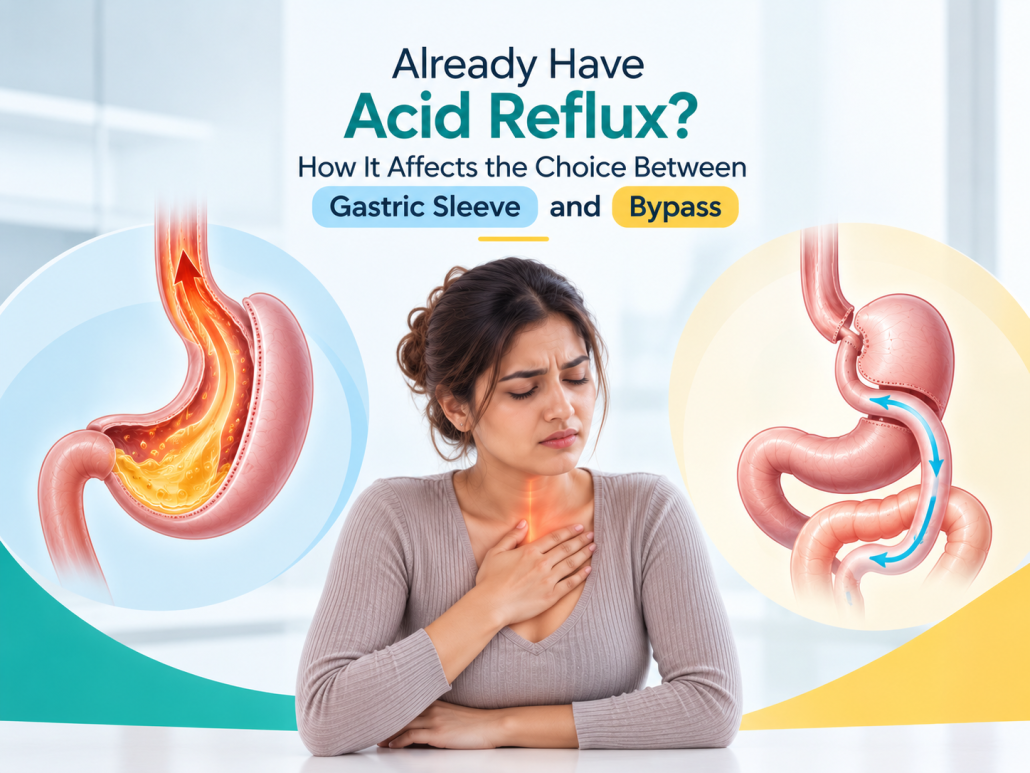
If you already have troublesome acid reflux, Roux-en-Y gastric bypass is often favoured over a gastric sleeve when bariatric surgery is otherwise appropriate. A sleeve can worsen existing reflux, while bypass often improves it. However, neither operation suits everyone, and bypass does not guarantee that reflux will disappear.
Why acid reflux matters before bariatric surgery
Acid reflux happens when stomach contents travel back into the oesophagus, the tube carrying food to your stomach. It may cause burning behind the breastbone or a sour taste as food or fluid comes back up. Gastroesophageal reflux disease, or GERD, is the medical term used when reflux becomes troublesome or causes complications.
Mention symptoms even if you call them “acidity” or control them with tablets. Describe how often they happen, whether they disturb sleep, and whether you have difficulty swallowing. Symptoms alone cannot show how much damage, if any, is present in the food pipe.
Why a gastric sleeve can worsen reflux
Sleeve gastrectomy removes much of the stomach, leaving a narrow tube. Food still follows its usual route through the intestine. The operation can support weight loss, but the smaller stomach may develop higher pressure, allowing contents to move upwards into the food pipe.
Some people experience improved symptoms as they lose weight, while others develop worse or new reflux. A sleeve should therefore not be chosen as an operation to treat GERD.
Long-term research supports taking this risk seriously. In the SLEEVEPASS trial’s ten-year follow-up, inflammation of the food pipe was found in 31% of sleeve patients versus 7% of bypass patients who underwent endoscopy. These results came from a Finnish trial involving people with severe obesity and are not a prediction of an individual patient’s outcome.
Why Roux-en-Y gastric bypass is often considered
Roux-en-Y gastric bypass creates a small stomach pouch and connects it to the small intestine. This changes the route of food and digestive juices, and often improves reflux as well as supporting weight loss.
Significant reflux, severe inflammation of the food pipe, or Barrett’s oesophagus can weigh strongly against choosing a sleeve. Barrett’s involves changes in the food pipe’s lining and needs specialist assessment. Surgical guidance advises counselling patients with these findings against sleeve surgery because reflux may worsen.
This comparison specifically concerns Roux-en-Y gastric bypass. If another bypass procedure is proposed, ask how its reflux risks differ.
What tests can help guide the choice?
Your surgeon reviews your symptoms, medicines, previous investigations and overall health. Depending on the findings, assessment may include:
- Upper gastrointestinal endoscopy: A camera examination of the food pipe and stomach to look for inflammation, other damage or a hiatus hernia.
- Reflux monitoring: Measuring acid exposure, and sometimes non-acid reflux, when the diagnosis or its relationship to symptoms needs clarification.
- Manometry: A test of how the food pipe muscles work, particularly when swallowing difficulties or a movement disorder are suspected.
Not everyone needs every test. Their purpose is to clarify the problem and help choose treatment, rather than decide from the severity of heartburn alone.
Ask whether your previous endoscopy is recent enough for planning and whether any abnormal finding changes the recommended operation. Also ask what follow-up is planned if reflux continues after surgery.
What are the trade-offs of choosing bypass?
Better reflux control is one part of the decision. Bypass is more complex than a sleeve and carries risks including ulcers, bowel obstruction and dumping syndrome, which can cause sickness after eating, particularly sugary foods. Vitamin and mineral deficiencies are also more likely than after sleeve surgery.
Both operations can cause bleeding, infection, leaks and blood clots. Both require ongoing nutritional care, prescribed supplements and follow-up.
Bring your medication list and previous endoscopy reports. Mention smoking and regular use of anti-inflammatory painkillers because these affect ulcer risk after bypass. Ask how each procedure fits your reflux findings and long-term nutritional needs. Do not change prescribed medicines without advice.
Frequently asked questions
Does occasional acidity mean I definitely need bypass?
No. Occasional symptoms do not automatically establish GERD or a need for weight loss surgery. Lifestyle measures, reflux medicines and non-surgical weight management may remain appropriate. Procedure selection comes after assessing both your obesity and digestive health.
Can repairing a hiatus hernia make a sleeve suitable?
A hiatus hernia means part of the stomach has moved upwards into the chest. Repair may help when it contributes to reflux, but it does not guarantee reflux control after a sleeve. The choice still depends on the overall findings.
What if I already have a sleeve and severe reflux?
Medical treatment is usually tried first. If confirmed reflux remains troublesome despite appropriate treatment, specialists may consider conversion to Roux-en-Y bypass or another suitable intervention. Current weight, anatomy and nutritional risks influence that decision.
When to seek prompt medical attention
Difficulty swallowing, repeated vomiting or unexplained weight loss need medical assessment. Vomiting blood needs urgent care. Sudden persistent chest pain, especially with sweating or breathlessness, needs emergency help and should not be assumed to be acidity.
Make the choice around your reflux assessment
Bring your reflux history to DOSS India in Baner when discussing Bariatric surgery in Pune. Reviewing symptoms, test results and nutritional needs together can help you understand which treatment offers the most suitable balance of benefits and risks.


Leave a Reply
Want to join the discussion?Feel free to contribute!