


 +919011100010

Nausea and Cramps After a Gastric Balloon: What Is Expected and When Should You Seek Help?
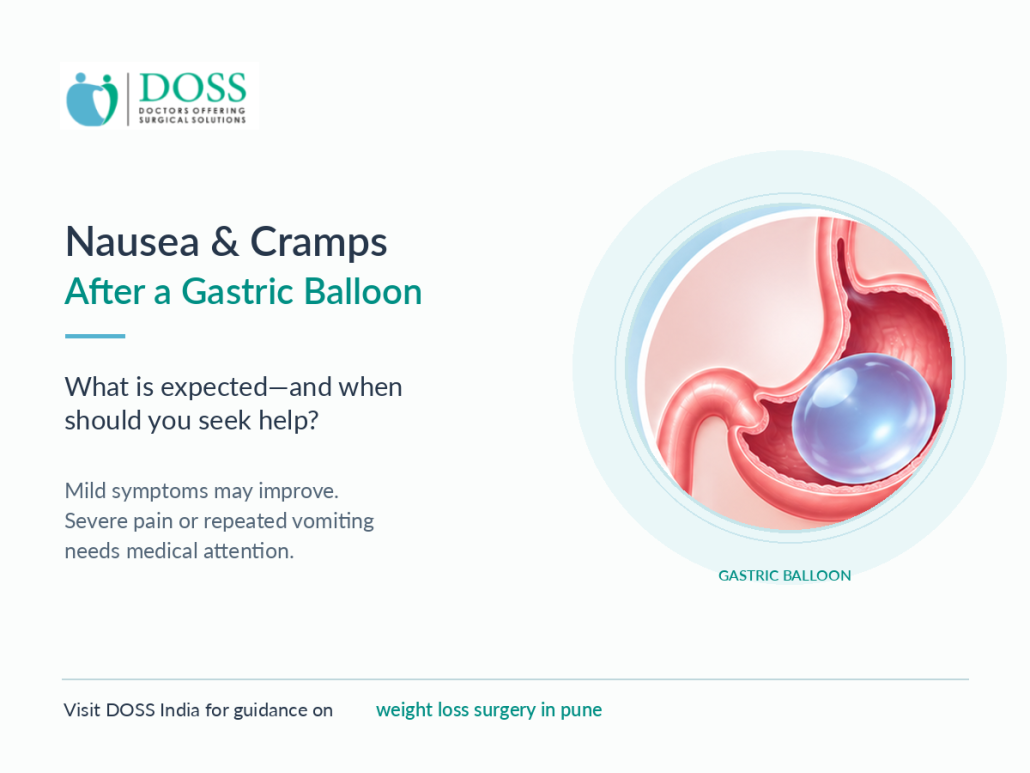
Feeling sick or experiencing stomach cramps after gastric balloon placement can be unsettling. You may wonder whether your stomach is adjusting normally or whether something needs medical attention.
Nausea, cramps and some vomiting can occur during the first few days. However, repeated vomiting, difficulty keeping fluids down or severe pain should not be dismissed as normal adjustment. How severe your symptoms are, whether they are improving and your ability to stay hydrated matter more than the number of days since placement. Mayo Clinic
Why Can a Gastric Balloon Cause Nausea and Cramps?
A gastric balloon occupies space inside the stomach and can slow stomach emptying. Your stomach needs time to adapt to its presence, which may initially cause nausea, fullness, bloating or cramping.
A balloon is a temporary weight-management device. It does not involve removing part of the stomach or rerouting the intestine. Even though it differs from bariatric surgery, it still requires medical supervision and a structured aftercare plan.
Your team may prescribe medicines for nausea, acidity and discomfort. Follow these instructions carefully, and report symptoms that are difficult to control.
What Is Expected During the First Few Days?
Early symptoms can include waves of nausea, intermittent cramps, earlier fullness and some vomiting. These symptoms commonly improve over the first few days, although the adjustment period varies.
A reassuring pattern is gradually improving comfort and an increasing ability to tolerate the fluids allowed in your plan. Mild symptoms should remain manageable with the treatment your team recommends.
There is no need to wait until a certain day before asking for help. Symptoms that become stronger, prevent drinking or return after you had been feeling better need prompt assessment.
How Can You Manage Mild Symptoms Safely?
Your balloon team’s instructions should guide your food, fluids and medicines. Dietary schedules vary, so avoid copying another patient’s plan.
Helpful measures commonly include:
- Take small, frequent sips: Avoid drinking a large glass quickly.
- Follow the prescribed food stages: Progress from liquids to other textures only as advised.
- Keep portions small: Stop when you feel full instead of finishing a planned portion.
- Eat slowly: Once food is allowed, chew thoroughly and avoid rushing.
- Avoid fizzy drinks: They can increase bloating and discomfort.
- Remain upright after eating: Avoid lying down immediately after meals.
These habits can reduce food-related discomfort, but they should not be used to manage severe pain or persistent vomiting at home. nth.nhs.uk
Take prescribed medicines as directed. If you vomit after a dose, ask your team what to do rather than automatically taking another dose.
When Should You Contact Your Balloon Team?
Contact your treating team promptly, without waiting for a routine appointment, if:
- Vomiting repeatedly prevents you from keeping fluids down.
- Nausea or cramps remain difficult to control despite prescribed treatment.
- Symptoms are worsening or return after initial improvement.
- You develop dark urine, pass less urine or feel persistently dizzy when standing.
- You cannot tolerate essential prescribed medicines.
Vomiting and reduced fluid intake can cause dehydration. Dry mouth, unusual tiredness and light-headedness may also be warning signs. Significant dehydration may require treatment that cannot be provided through drinking alone. NHS
When calling, explain when the balloon was placed, how often you are vomiting, how much you can drink and when you last passed urine. These details help the team assess urgency.
Which Symptoms Need Emergency Assessment?
Seek urgent hospital assessment for severe or persistent abdominal pain, especially pain spreading to the back, marked abdominal swelling or difficulty breathing. Vomiting blood, black tarry stools, fainting or confusion also need emergency attention.
Rare complications include balloon overinflation, inflammation of the pancreas, bleeding, perforation or a blockage if a deflated balloon moves into the intestine. Symptoms alone cannot establish which problem is present.
The FDA has reported severe abdominal pain, swelling, vomiting and breathing difficulty with balloon overinflation, and severe abdominal and back pain with pancreatitis. These problems can occur beyond the initial adjustment period. FDA
Tell the emergency team that you have a gastric balloon. Bring your device details and medicine list if available, but do not delay seeking care to find them.
What Happens if You Cannot Tolerate the Balloon?
Persistent symptoms deserve assessment rather than pressure to “push through.”
Your doctor may review hydration, medicines and food tolerance, and arrange investigations when needed. Some patients require additional treatment or early balloon removal if symptoms remain uncontrolled or a complication develops.
Early removal is a medical decision, not a personal failure. Your longer-term weight-management plan can be reviewed once the immediate problem is addressed. Keep follow-up appointments and follow the removal schedule for your particular device.
Frequently Asked Questions
How long should nausea last after balloon placement?
It often improves within a few days, but experiences vary. Contact your team if symptoms persist or are difficult to manage. Seek help sooner for repeated vomiting, severe pain or difficulty drinking.
Does vomiting mean the balloon is working?
No. The aim is to support earlier fullness and smaller portions. Vomiting is a side effect that needs attention when repeated, severe or affecting hydration.
What if my urine turns blue or green?
Some balloons contain a coloured dye that may change urine colour if the balloon leaks. Contact your balloon team immediately if this occurs. Not every device contains dye, so normal urine colour does not rule out a problem. South Tees Hospitals NHS Foundation Trust
Get Guidance for a Safer Recovery
Mild early symptoms may settle, but severe pain and difficulty staying hydrated need prompt attention.
If you are comparing gastric balloon treatment with weight loss surgery in pune, consult DOSS India to understand the differences, suitability and aftercare each option requires.



Leave a Reply
Want to join the discussion?Feel free to contribute!