


 +919011100010
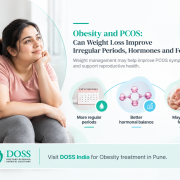
Obesity and PCOS: Can Weight Loss Improve Irregular Periods, Hormones and Fertility?
How Weight Management May Support PCOS Care
Irregular periods, acne, unwanted facial hair and difficulty becoming pregnant are common concerns among women with polycystic ovary syndrome, commonly called PCOS. When excess weight is also present, many women are advised to lose weight. This can make it sound as if body weight is the only cause of the condition, which is not true.
PCOS is a complex hormonal and metabolic condition. It can affect women of every body size, and losing weight does not cure it. However, for someone who has overweight or obesity, safe and sustainable weight reduction may improve insulin function, support more regular ovulation and reduce some PCOS symptoms.
The response is different for every woman. Weight management should form one part of an individual plan that may also include menstrual care, medicines, fertility treatment and long-term metabolic monitoring.
Understanding the Link Between Obesity and PCOS
The World Health Organization describes PCOS as a common hormonal disorder linked with higher androgen levels, irregular ovulation and an increased risk of insulin resistance, type 2 diabetes and obesity. It estimates that PCOS affects about 10 to 13 percent of women of reproductive age worldwide.
Insulin helps the body move glucose from the blood into cells. In insulin resistance, the body needs to produce more insulin to perform this work. Higher insulin levels can encourage the ovaries to produce more androgens. This may interfere with regular ovulation and contribute to acne, unwanted hair growth and irregular periods.
Excess body fat, particularly around the abdomen, can make insulin resistance and inflammation more difficult to manage. At the same time, PCOS itself may make weight management harder for some women. This creates a cycle in which hormones, appetite, metabolism, sleep, emotional health and weight can influence one another.
This does not mean that every woman with PCOS has insulin resistance or needs to lose weight. A proper assessment should consider symptoms, menstrual history, blood pressure, blood sugar, cholesterol, pregnancy plans and other possible causes of irregular periods.
Can Weight Loss Make Periods More Regular?
Yes, it may help when higher weight and insulin resistance are contributing to irregular ovulation. As insulin sensitivity improves, the hormonal signals involved in egg development and release may also improve. Some women begin to ovulate more regularly, which can make menstrual cycles more predictable.
The Eunice Kennedy Shriver National Institute of Child Health and Human Development states that losing a small amount of weight and becoming more active can reduce several PCOS concerns in people who have overweight or obesity. It notes that weight loss may restore ovulation and help make periods more regular.
However, weight loss should not be the only plan for someone who goes for long periods without menstruating. Infrequent periods can allow the lining of the uterus to build up. A gynaecologist may recommend hormonal treatment or another method to protect the uterine lining, even while weight management is in progress.
Can Weight Loss Improve Hormonal Balance?
Weight reduction does not remove PCOS, but it may improve some of the metabolic signals that influence hormone production. Better insulin sensitivity may help lower excess androgen activity in some women. This can support improvements in ovulation, acne or unwanted hair growth, although visible changes may take time and are not guaranteed.
Weight is only one part of hormonal health. Thyroid disorders, high prolactin, certain medicines and other medical conditions can produce symptoms that resemble PCOS. This is why diagnosis should not be based only on weight, acne or an ultrasound report.
The 2023 International Evidence-based PCOS Guideline recommends healthy eating and physical activity for all women with PCOS. It also stresses that a healthy lifestyle can provide benefits even when the number on the weighing scale does not change.
Can Weight Loss Improve Fertility in PCOS?
PCOS commonly affects fertility because the ovaries may not release an egg regularly. If weight management helps ovulation become more consistent, the chance of natural conception may improve. It may also support preparation for ovulation-induction treatment or assisted reproduction.
Still, weight loss cannot guarantee pregnancy. Age, egg reserve, fallopian-tube health, semen factors, endometriosis and other conditions may also influence fertility. A couple should not assume that PCOS or weight is the only possible reason for delayed conception.
The international guideline advises women with PCOS that pregnancy can often be achieved naturally or with assistance. It also recommends reviewing weight, blood pressure, blood sugar, nutrition, sleep, medicines and emotional health before pregnancy. Fertility assessment should not be postponed indefinitely while trying to reach an “ideal” weight.
A Safe Approach to Weight Management With PCOS
- Begin with a complete medical assessment. Evaluation may include menstrual history, current medicines, pregnancy plans, blood pressure and tests for glucose, cholesterol, thyroid function or other conditions when appropriate.
- Choose sustainable food changes. No single “PCOS diet” has been proven best for every woman. Meals should be nutritionally balanced, practical and suited to food preferences, medical needs and daily routine.
- Add regular physical activity. Walking, strength training, cycling, swimming or other suitable activities can support insulin sensitivity, fitness and emotional health. The plan should consider joint pain, mobility and current fitness.
- Address sleep, stress and eating behaviour. Poor sleep, anxiety, depression, binge eating and emotional eating can affect both PCOS and weight-management efforts. These concerns deserve respectful care rather than blame.
- Set health goals beyond kilograms. Improvements in waist measurement, stamina, blood sugar, cholesterol, sleep or menstrual tracking may be meaningful even when weight changes slowly.
Avoid crash diets, unregulated supplements and very restrictive plans. Rapid short-term loss followed by regain is not a reliable PCOS strategy. The international guideline supports an individual approach and states that no one diet composition is clearly superior for hormonal, reproductive or metabolic outcomes.
When Are Medicines or Procedures Considered?
Treatment depends on the main concern. Hormonal medicines may be used to regulate periods when pregnancy is not currently desired. Metformin may be considered for selected metabolic or cycle-related concerns. Ovulation medicines may be needed when pregnancy is the goal. Weight-management medicines can also be considered for some adults, but pregnancy plans and contraception must be discussed because not every medicine is safe around conception.
For women with clinically significant obesity, structured obesity care may include nutrition support, behavioural care, prescription medicines, an endoscopic procedure or bariatric surgery. The choice should depend on overall health, previous treatment, BMI, obesity-related conditions and the woman’s preferences, not on PCOS alone.
The international guideline states that bariatric or metabolic surgery may be considered for selected women with PCOS and may improve weight, irregular cycles, ovulation and pregnancy rates. Surgery is not a routine PCOS treatment and does not guarantee fertility. Because fertility may return quickly after surgery, effective contraception is important. Pregnancy is generally delayed until weight becomes stable, often for at least one year, according to the treating bariatric and obstetric teams.
When Should You Seek Medical Advice?
- Periods are absent for several months or have become unusually heavy or painful.
- You are trying to become pregnant and cycles are irregular or ovulation is uncertain.
- You have rapid hair growth, a deepening voice or other sudden hormonal changes.
- Weight is increasing despite consistent efforts, or symptoms suggest diabetes, sleep apnoea or another metabolic condition.
- PCOS symptoms are affecting mood, eating behaviour, confidence or daily life.
Early assessment can identify related health risks and prevent all symptoms from being treated as a weight problem. PCOS care may involve a gynaecologist, endocrinologist, fertility specialist, dietitian, mental health professional and obesity-care team according to individual needs.
Frequently Asked Questions
1. How much weight do I need to lose to improve PCOS symptoms?
There is no single target that suits every woman. Even modest, sustainable weight reduction may help ovulation, menstrual regularity and metabolic health in some women who have overweight or obesity. Your goal should be based on your health, symptoms and pregnancy plans rather than a fixed number copied from someone else.
2. Can weight loss cure PCOS permanently?
No. PCOS is a long-term hormonal and metabolic condition. Weight management may reduce some symptoms and health risks, but it does not remove the underlying condition. Regular follow-up remains important even when periods improve or weight decreases.
3. Can bariatric surgery improve fertility in women with PCOS?
Bariatric surgery may improve ovulation and fertility in appropriately selected women with obesity and PCOS, but pregnancy is not guaranteed. Fertility can return sooner than expected after surgery, so contraception and pregnancy timing must be planned with the bariatric and gynaecology teams. Surgery should be chosen for clear obesity-related health indications after a detailed assessment.
Consult DOSS India for Personalised Obesity Care
DOSS India provides structured evaluation for people who need support with long-term weight and metabolic health. Women seeking Obesity treatment in Pune can receive an individual review of their weight history, previous treatment, health conditions and pregnancy plans before medical, endoscopic or surgical options are discussed. When PCOS is present, obesity care should be coordinated with the appropriate gynaecology, endocrinology or fertility specialists. Treatment suitability and results vary for every person.
This article provides general educational information and does not replace personal medical advice, diagnosis or treatment.
#pcos #obesitytreatment #womenshealth #hormonalhealth #fertilityhealth #weightmanagement #obesitycare #punehealth