


 +919011100010
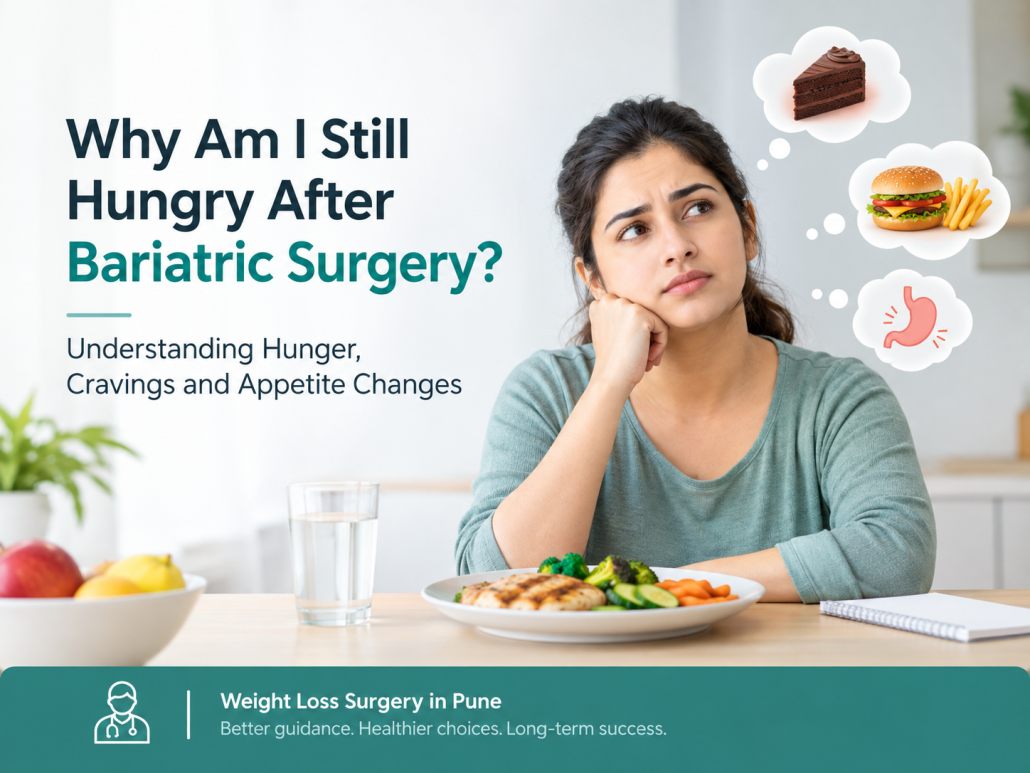
Why Am I Still Hungry After Bariatric Surgery? Understanding Hunger, Cravings and Appetite Changes
Why Appetite Can Return After Surgery
Many people expect hunger to disappear completely after bariatric surgery. When appetite returns, they may worry that the operation has failed or that their stomach has stretched. In most cases, feeling hungry does not automatically mean either of these things.
Weight loss surgery changes the digestive system and can influence how much food you can eat, how quickly you feel full and how the gut communicates with the brain. However, it does not remove every biological, emotional or environmental reason for wanting food. Appetite also differs from one person to another and may change as the body heals.
Understanding whether you are experiencing physical hunger, a craving, a learned habit or a medical concern is the first step towards responding safely.
How Does Weight Loss Surgery Affect Hunger?
The National Institute of Diabetes and Digestive and Kidney Diseases explains that bariatric surgery makes changes to the digestive system to support weight loss. Depending on the procedure, it may reduce stomach capacity, change the route of food or affect signals linked with appetite and blood sugar control.
Hunger is regulated by more than stomach size. The brain, digestive tract, hormones, sleep, stress, medicines, meal pattern and food environment can all influence appetite.
For example, ghrelin is associated with meal initiation and hunger, while GLP-1 and PYY contribute to fullness. A systematic review and meta-analysis published in Annals of Surgery examined 28 studies involving 653 people after sleeve gastrectomy. On average, fasting ghrelin decreased while GLP-1 and PYY increased. These findings help explain why appetite often reduces after surgery, but they do not mean that every person will have the same response or that hunger will remain absent permanently.
As recovery progresses and regular foods return, hunger may become easier to notice. This can be a normal part of adjustment. What matters is the pattern, intensity, associated symptoms and effect on eating or weight.
Physical Hunger, Cravings and Head Hunger Are Different
Physical hunger usually builds gradually and may be satisfied by several suitable foods. You may notice an empty feeling, lower energy or reduced concentration, especially when there has been a long gap between meals.
A craving is usually a strong desire for a particular food, even when the body may not need energy. The American Heart Association notes that cravings differ from hunger and can be triggered by food cues, habits and the brain’s reward pathways. Smell, advertisements, social situations, boredom or an old routine can therefore create a desire to eat after weight loss surgery.
Some people call this “head hunger.” It is not imaginary and it should not be treated as a lack of willpower. It simply means the urge may be driven more by thoughts, emotions or cues than by a physical need for food.
A helpful question is: “Would I eat the balanced meal planned by my bariatric team right now, or do I want only one specific food?” This is not a medical test, but it can help you pause and identify the likely trigger.
Common Reasons You May Still Feel Hungry After Bariatric Surgery
- Your meals may be low in protein. Protein supports healing and muscle maintenance and can make meals more satisfying. The American Society for Metabolic and Bariatric Surgery states that many programmes recommend 60 to 100 grams of protein daily, depending on the patient. Your own target should always come from your bariatric dietitian or surgeon.
- You may be relying on soft or liquid calories. Sweet drinks, high-calorie coffee, desserts and foods that break down quickly may pass through the stomach more easily than a structured meal. They can add energy without creating the same lasting fullness.
- Meals may be too small, rushed or irregular. Missing planned meals can lead to strong hunger later. Eating quickly may also make it harder to recognise early fullness. The right portion and schedule depend on your procedure, recovery stage and diet plan.
- Thirst may be adding to the urge to eat. Hydration can be difficult after surgery because fluids must be taken gradually. ASMBS advises patients to focus on adequate fluid intake, but the exact amount and timing should follow the treating team’s instructions.
- Old eating cues may still be active. Watching television, ordering food at a usual time, seeing snacks at work or eating during stress can restart familiar behaviour even when the stomach is not physically empty.
- Your appetite or health needs may have changed. Medicines, poor sleep, emotional distress, blood sugar changes and some medical or surgical issues can affect appetite. A sudden or persistent change deserves professional assessment rather than self-diagnosis.
What Can Help You Manage Hunger Safely?
- Follow the meal structure given by your bariatric team and do not copy another patient’s diet.
- Begin meals with the recommended protein food, then include vegetables, fruit or other foods as allowed in your current stage.
- Eat slowly, chew thoroughly and pause between bites so you can notice fullness.
- Keep calorie-containing drinks and frequent grazing from quietly replacing balanced meals.
- Record the time, food, emotion and situation when hunger appears. A short diary can reveal repeated triggers.
- Build non-food responses to stress or boredom, such as a short walk, breathing practice, calling someone or changing your surroundings.
- Attend scheduled reviews with the surgeon and dietitian, even when weight loss is progressing well.
Do not sharply reduce food, skip meals for long periods or begin supplements or weight-loss medicines without professional advice. After weight loss surgery, nutritional needs and medicine absorption can differ from those of someone who has not had surgery.
When Should Hunger Be Discussed With Your Bariatric Team?
Arrange a review if hunger is intense, appears soon after every meal, leads to repeated loss-of-control eating or is accompanied by weight regain. Your team can review food quality, portion size, meal timing, hydration, emotional triggers, medicines and the type of operation you had.
Seek medical advice promptly if the feeling you call hunger comes with repeated vomiting, difficulty swallowing, persistent reflux, worsening abdominal pain, faintness or an inability to keep fluids down. Hunger with sweating, shaking, weakness or dizziness after eating also needs assessment because low blood sugar is one possible cause.
Long-term review is part of treatment, not a sign of failure. ASMBS recommends regular follow-up because obesity is a chronic condition and some patients may need additional nutritional, behavioural, medical or surgical support over time.
Frequently Asked Questions
1. Is it normal to feel hungry after bariatric surgery?
Yes, some hunger can be normal, especially as healing progresses and regular foods are reintroduced. Weight loss surgery often reduces appetite, but it does not guarantee that hunger will disappear. Speak with your bariatric team if hunger is sudden, severe, constant or affecting your weight-loss progress.
2. Does feeling hungry mean my stomach has stretched after weight loss surgery?
Not necessarily. Hunger alone cannot show whether the stomach or surgical connection has changed. Low-protein meals, liquid calories, long gaps between meals, cravings and emotional eating can all make hunger more noticeable. A clinician may recommend dietary review, tests or endoscopy only when the history and symptoms suggest that these are needed.
3. How can I control cravings after bariatric surgery?
First identify whether the urge is physical hunger or a desire for one specific food. Follow your planned meals, prioritise protein, reduce exposure to trigger foods and keep a brief food-and-mood diary. If cravings feel difficult to control or are linked with binge eating, anxiety or low mood, ask for support from a bariatric dietitian or qualified mental health professional.
Get Individual Guidance From DOSS India
DOSS India provides evaluation and follow-up support for people considering or living with bariatric treatment. If persistent hunger, cravings or appetite changes are affecting your progress, the team can review your eating pattern, symptoms, weight trend and previous procedure before suggesting appropriate nutritional, behavioural or medical next steps. People exploring Weight loss surgery in Pune can also receive personalised guidance about available options, expected lifestyle changes and long-term follow-up. Results and treatment needs vary from person to person.
This article is for general education and does not replace personal medical advice, diagnosis or treatment.
#weightlosssurgery #bariatricsurgery #bariatricnutrition #appetitecontrol #obesitycare #weightlossjourney #punehealth

Leave a Reply
Want to join the discussion?Feel free to contribute!